EmergedSubmerged
61st International Venice Biennale, Venice Pavilion, Giadini, Venice.
Curated By Giovanna Zabotti e Denis Isaia
In collaboration with Olivari spa
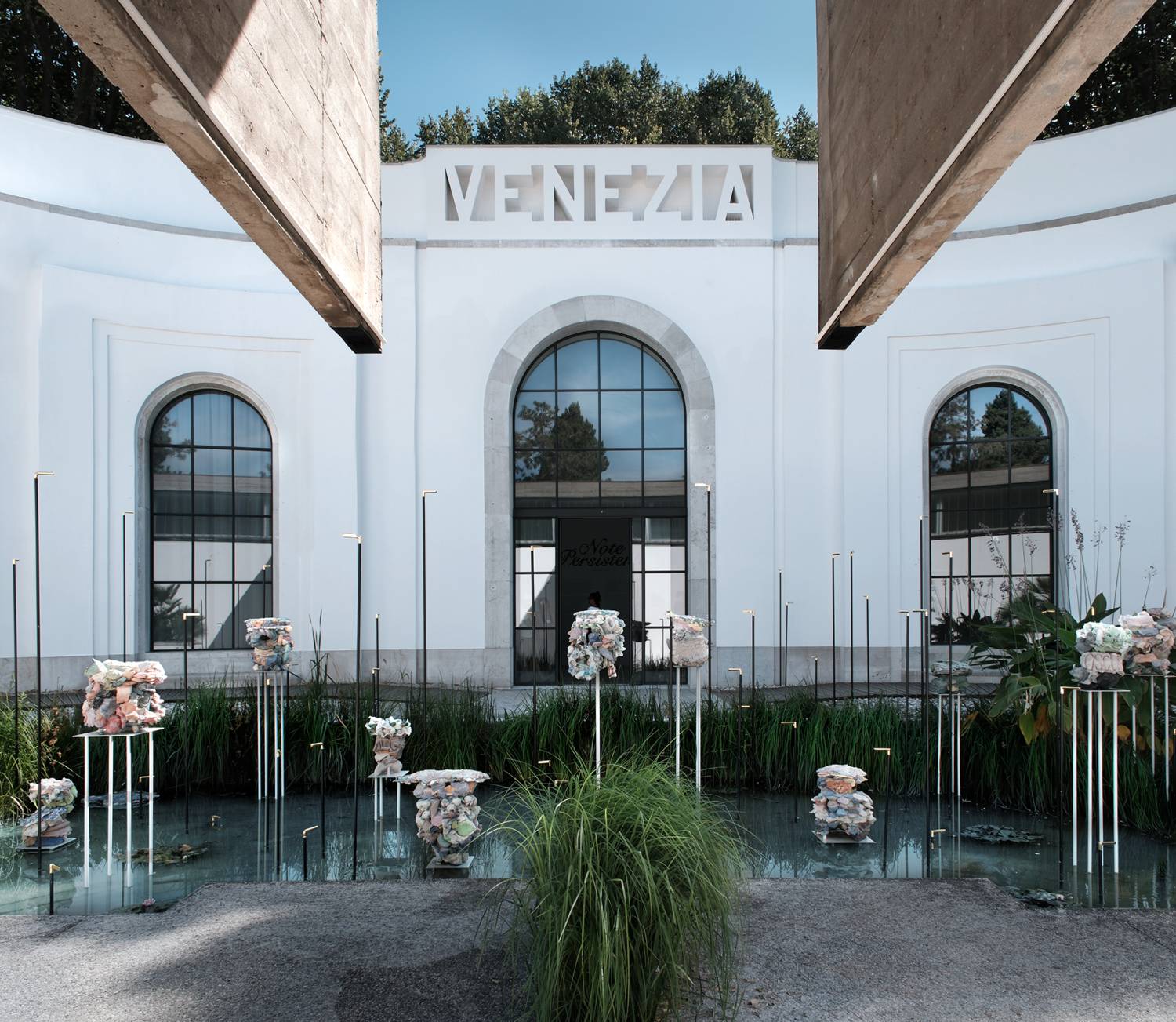
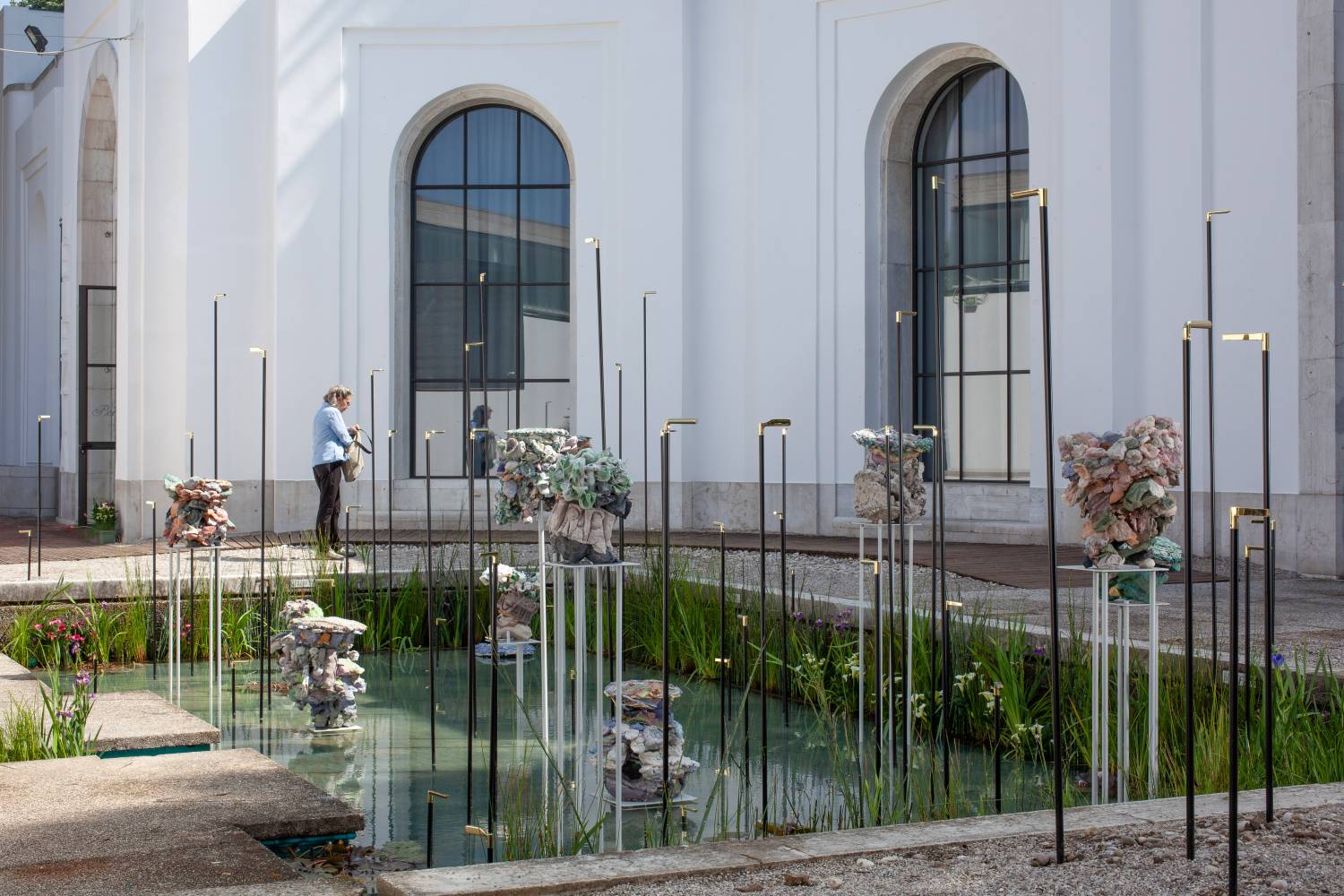
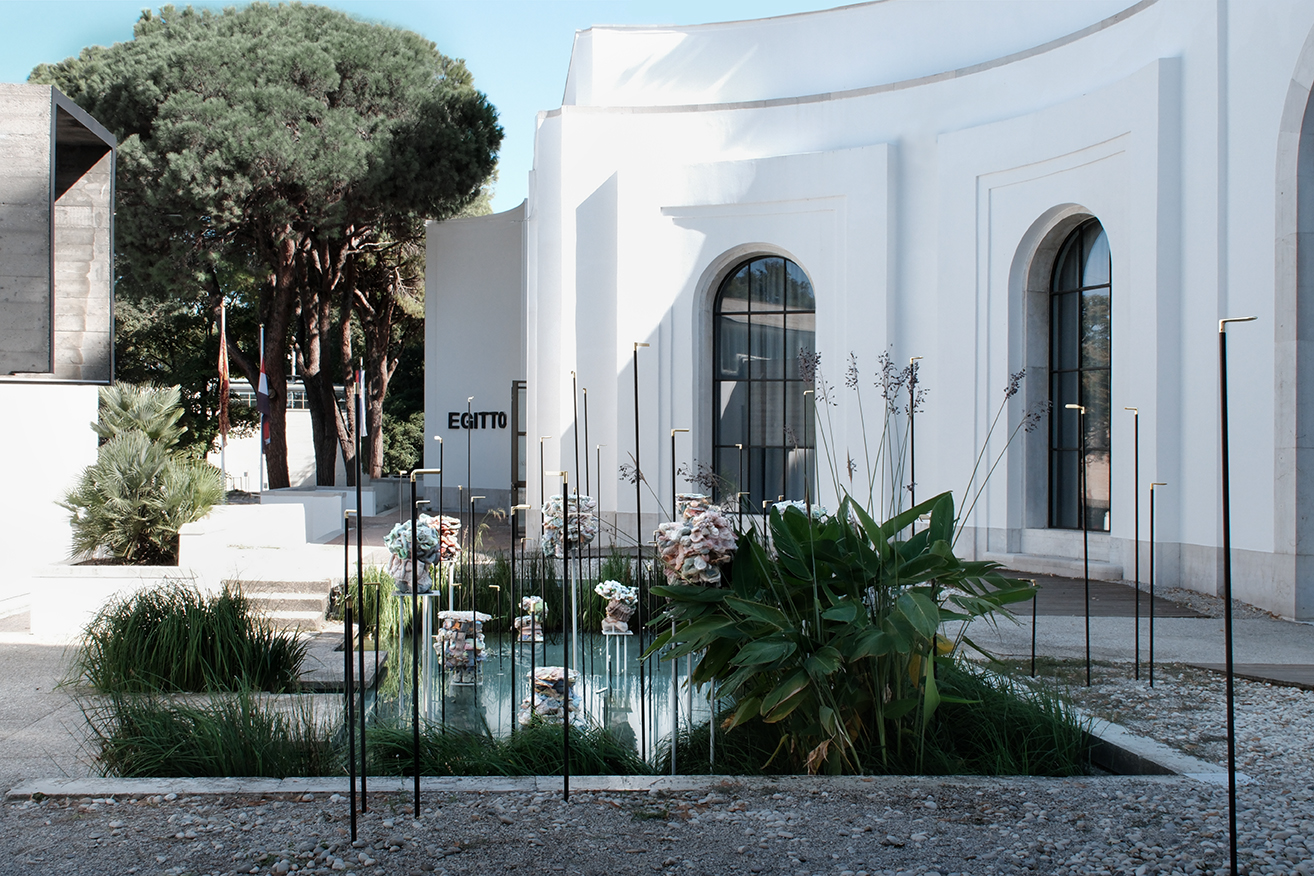
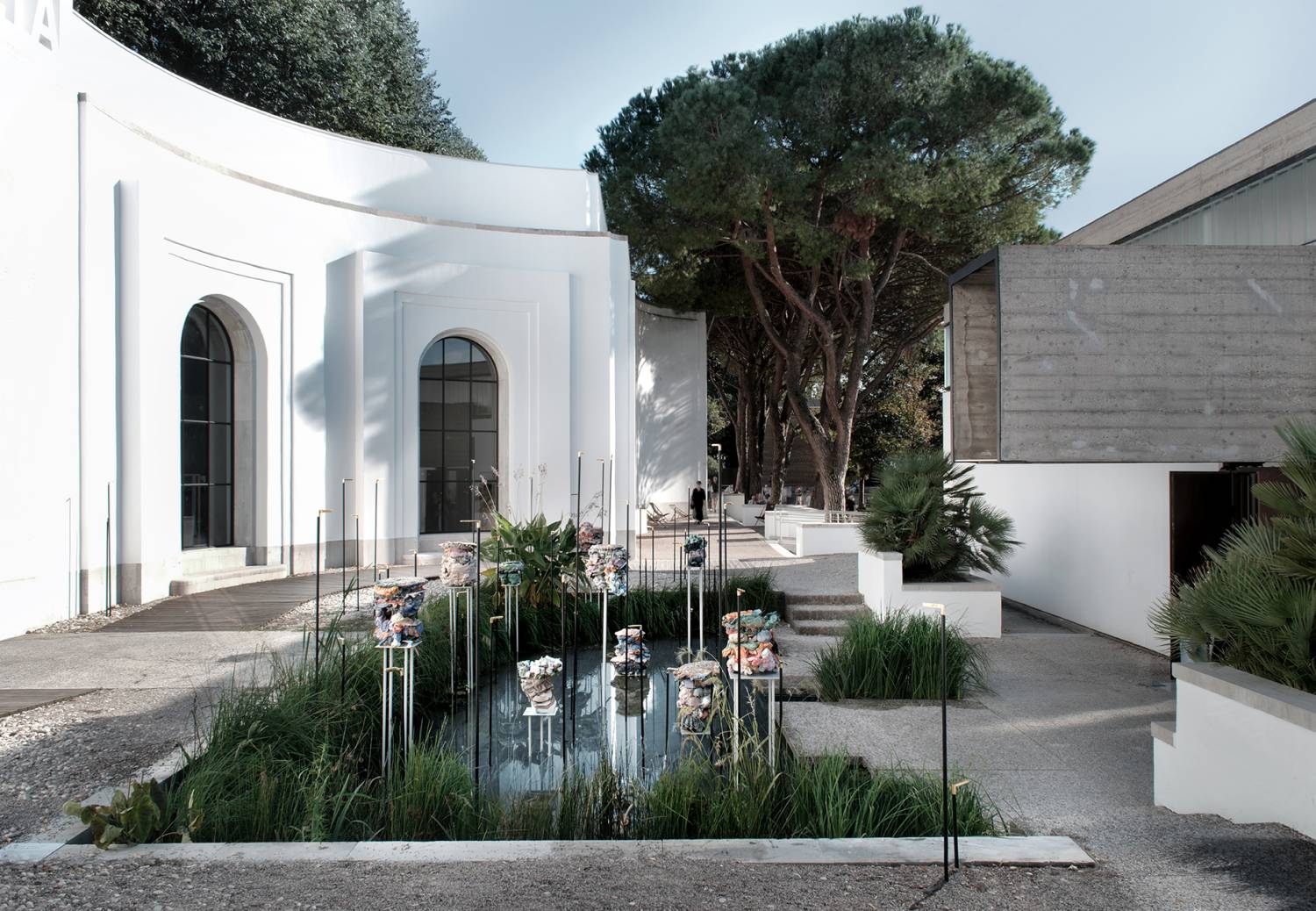
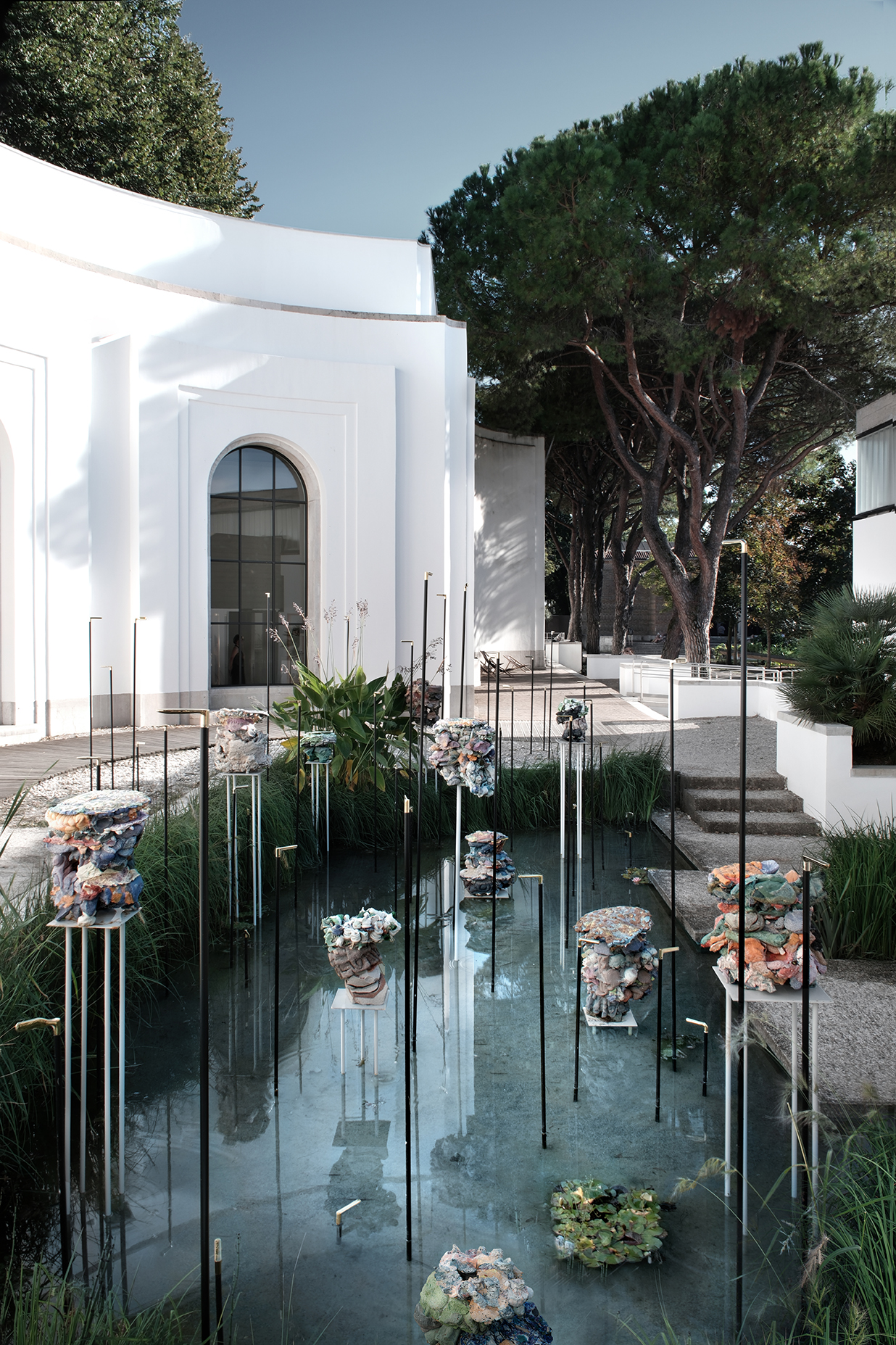
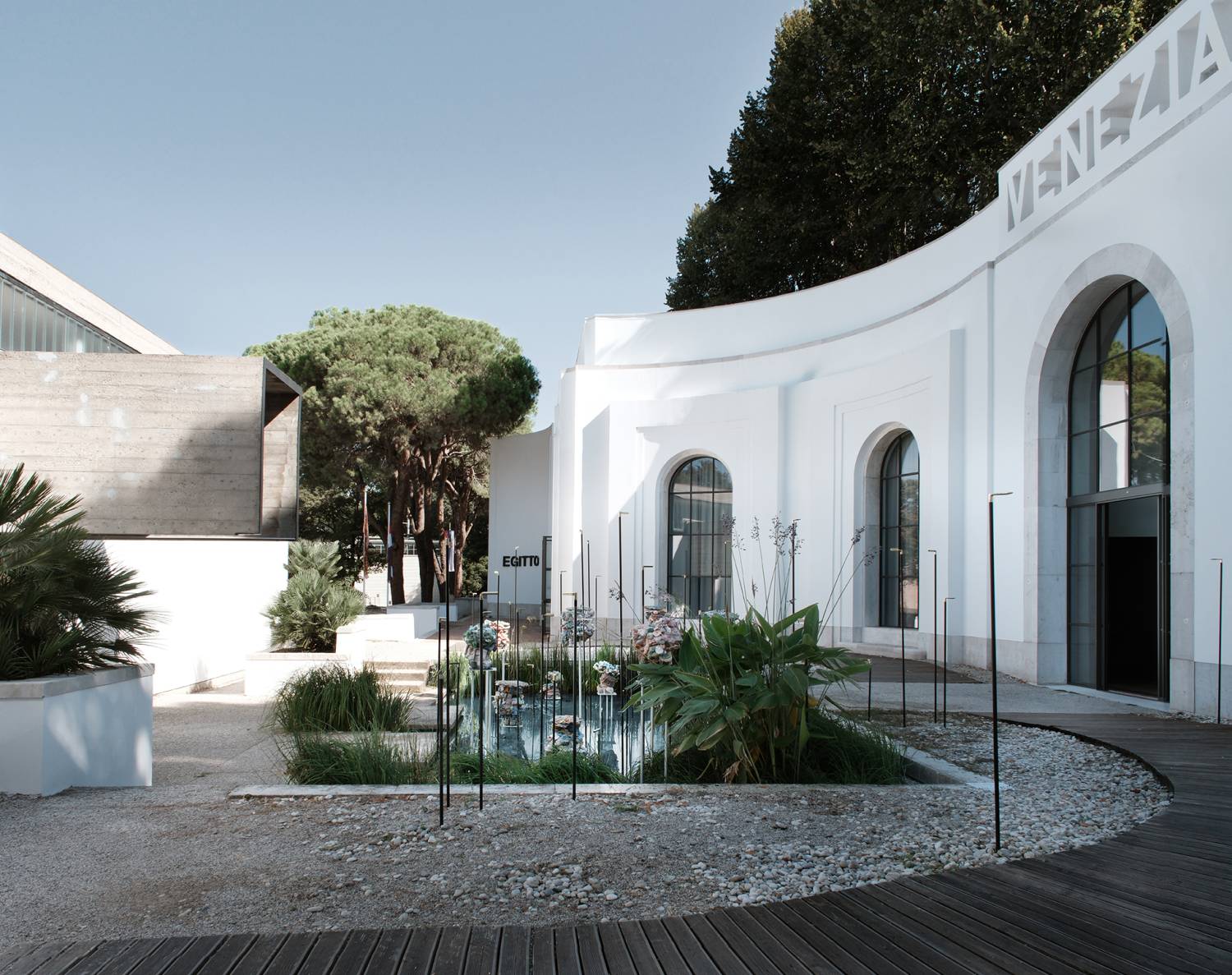
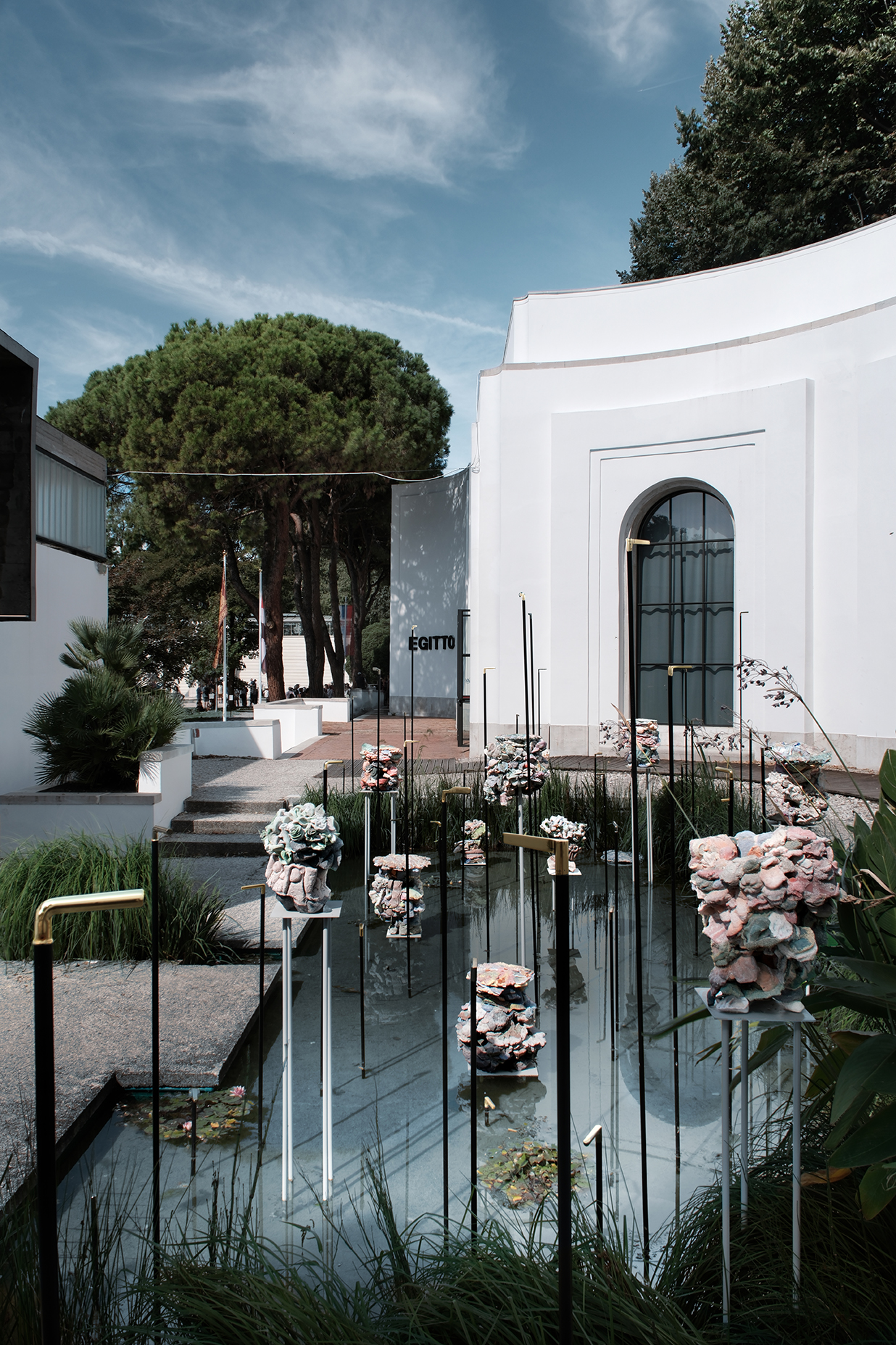
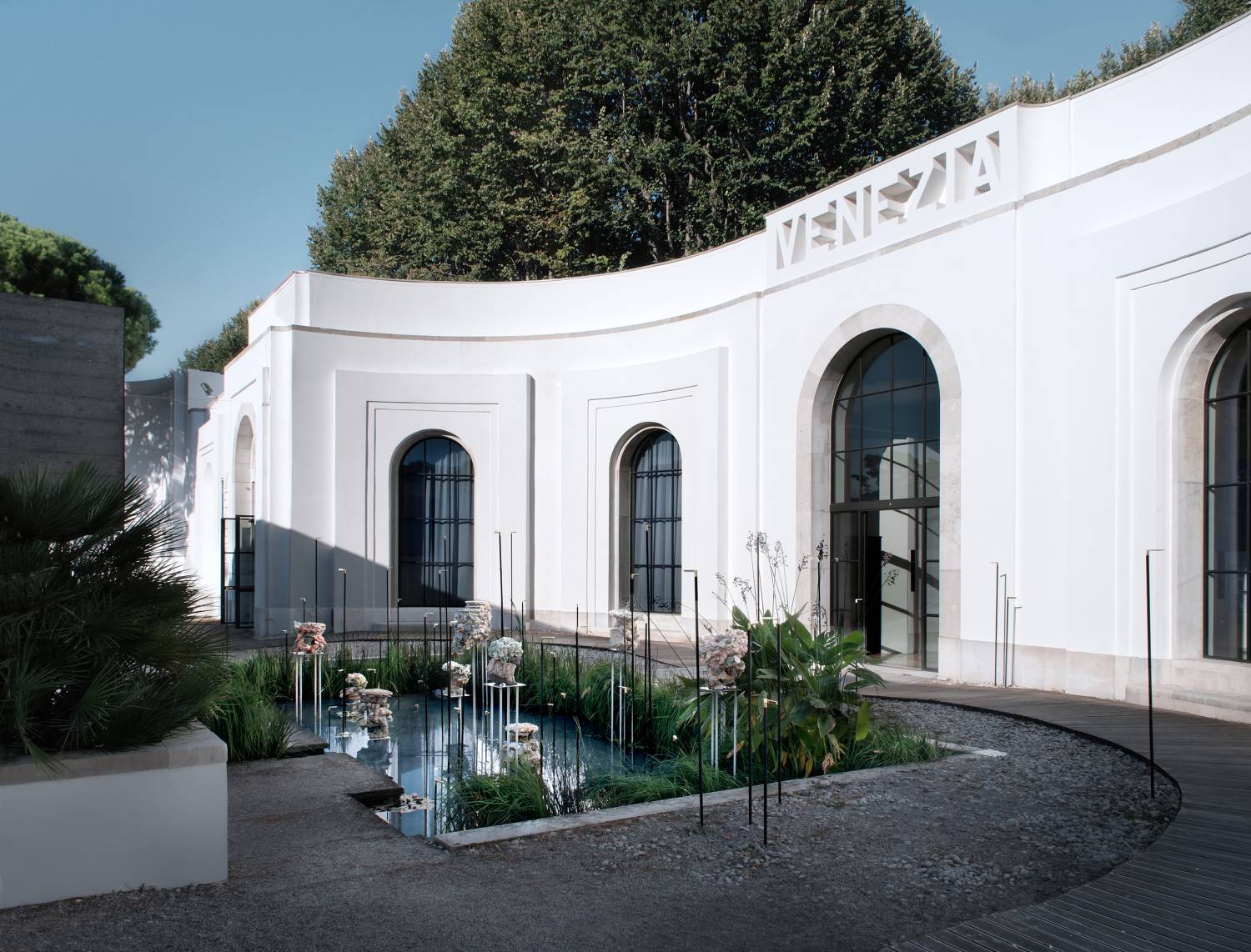
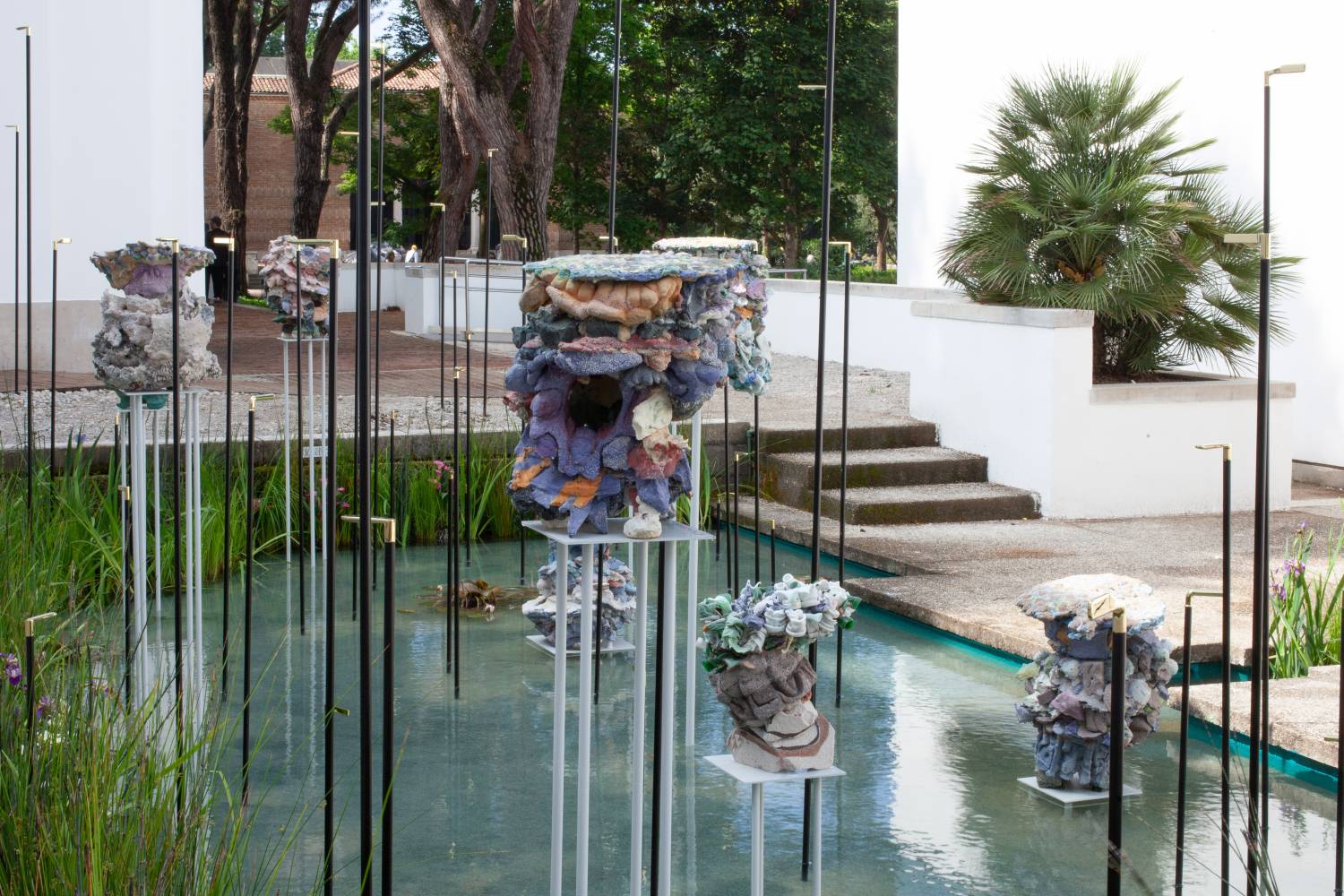
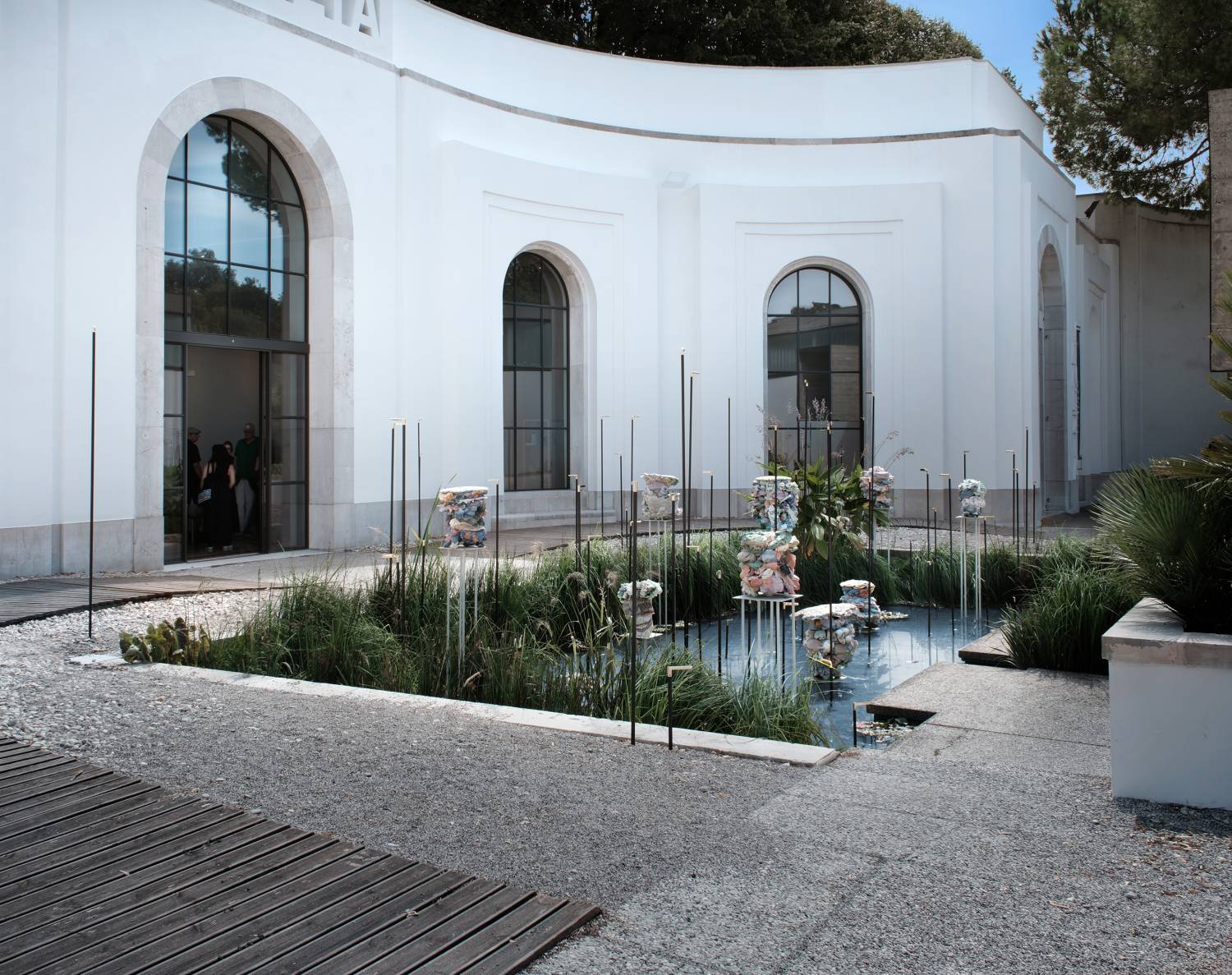
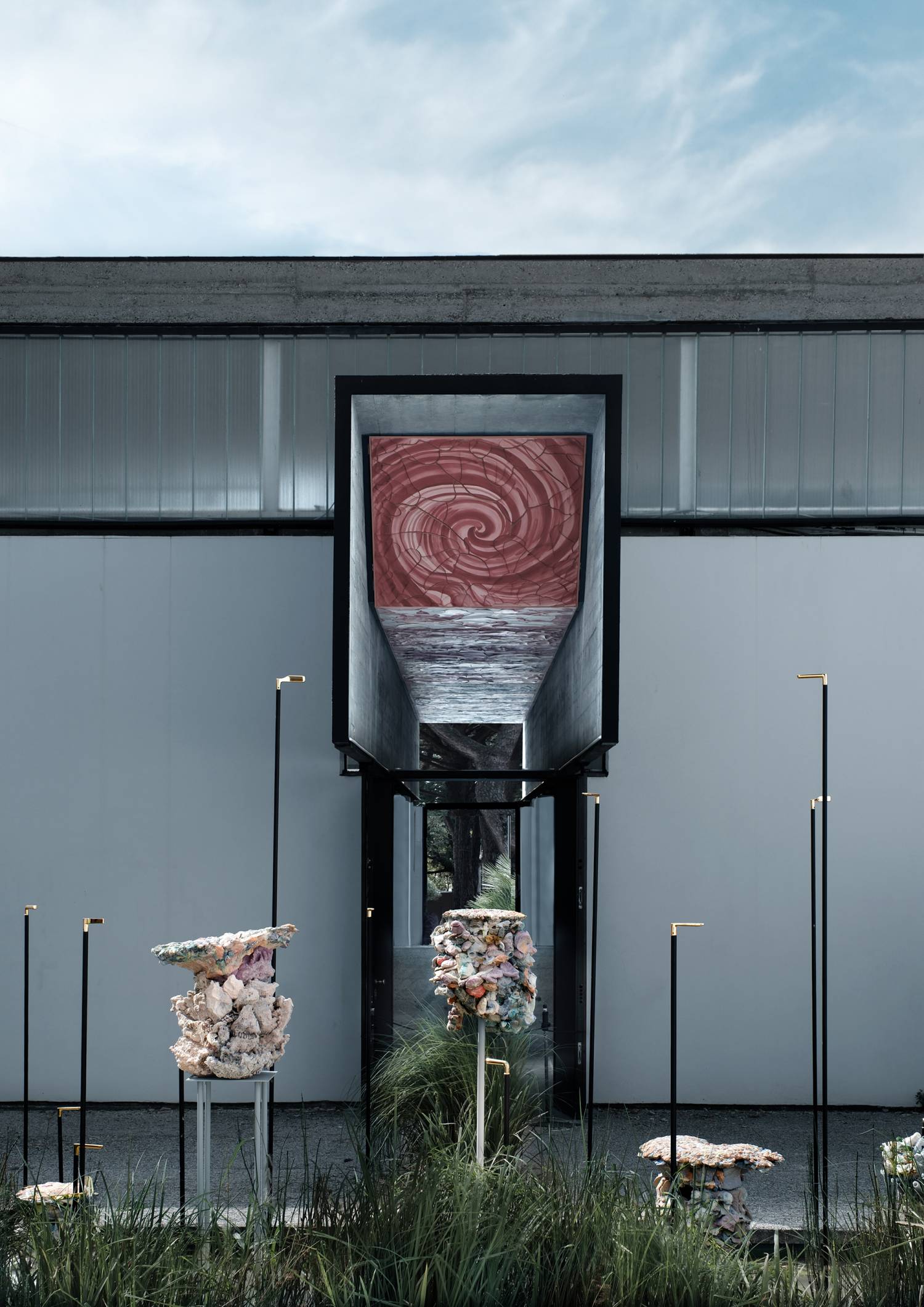
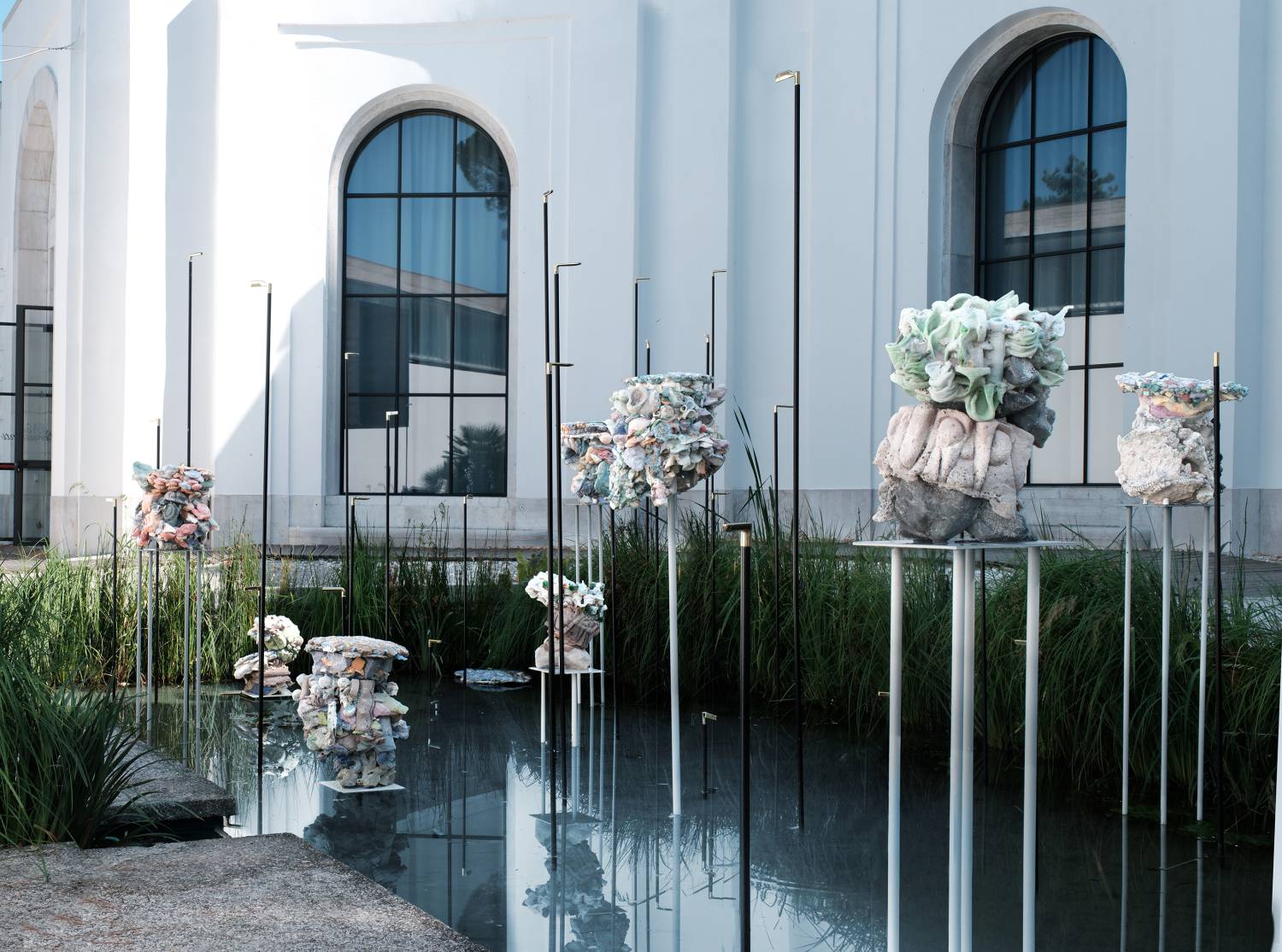
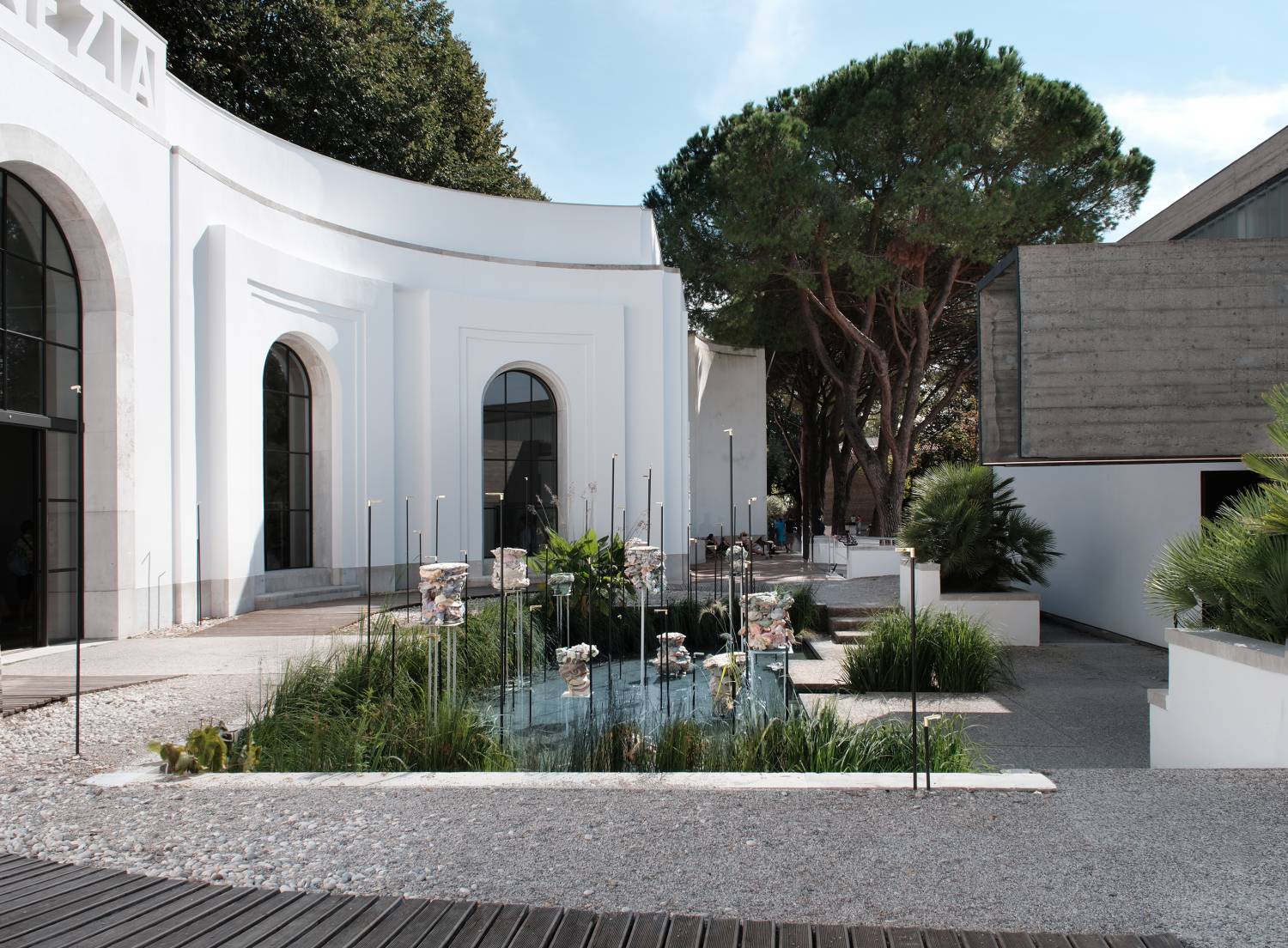
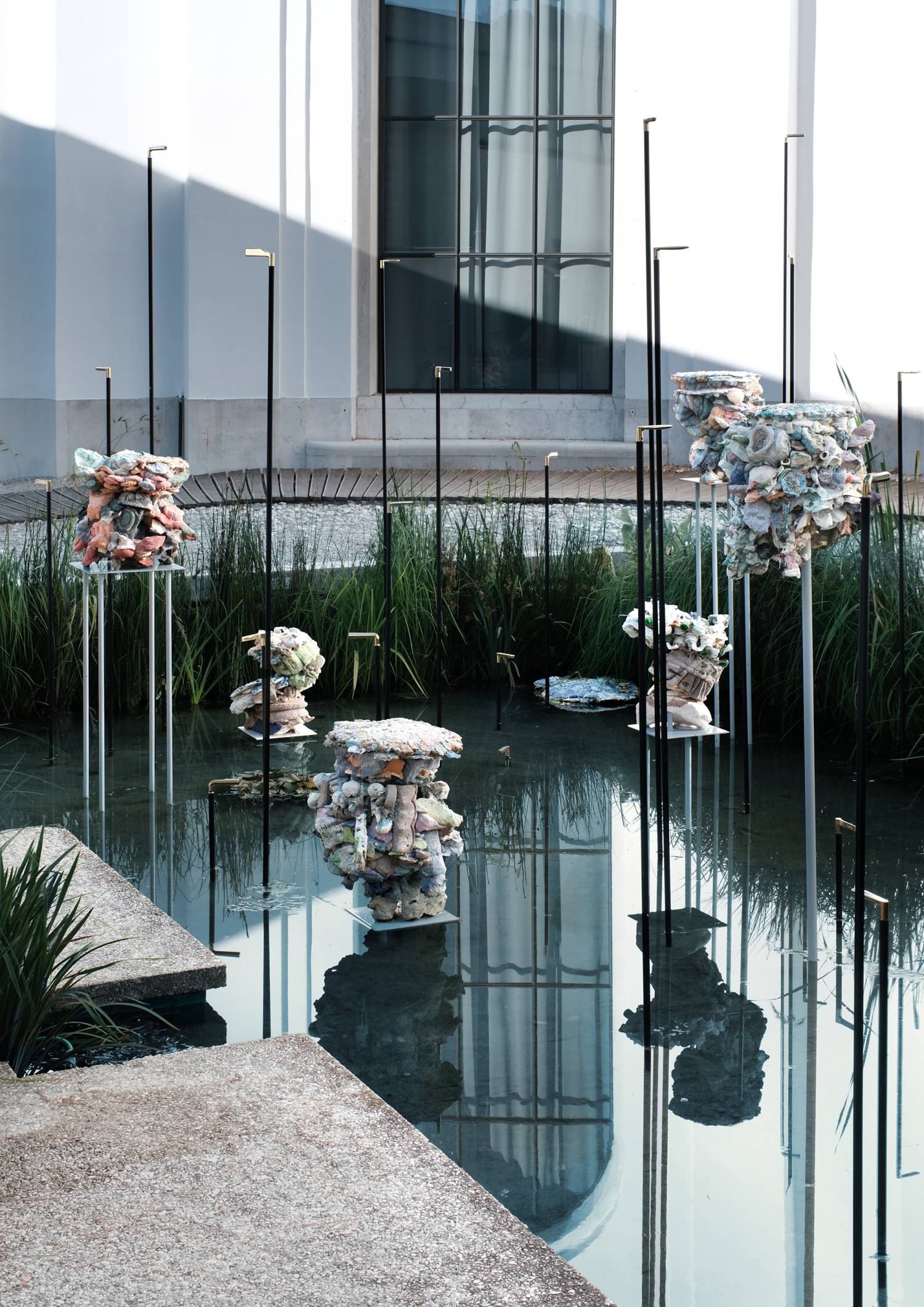
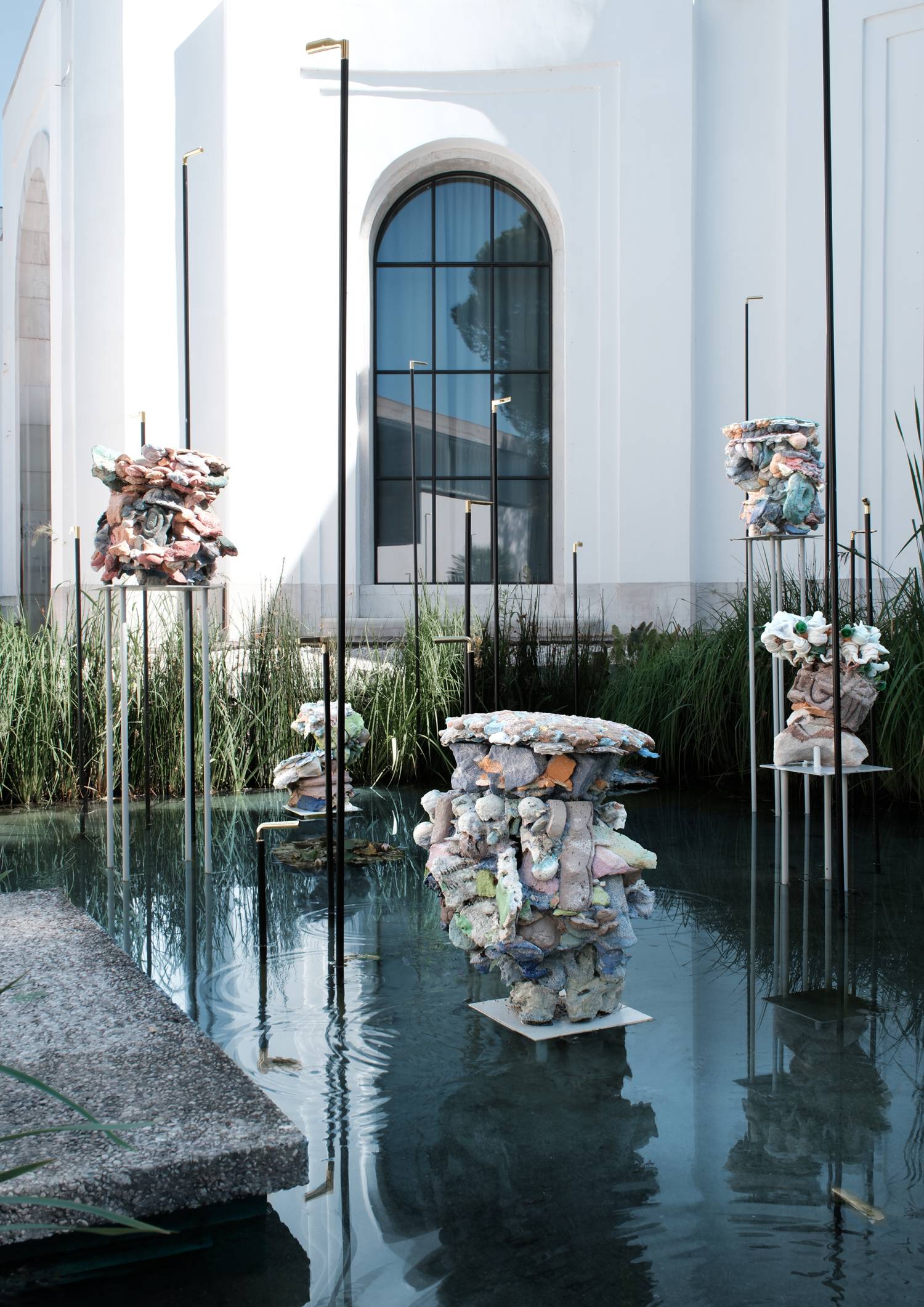
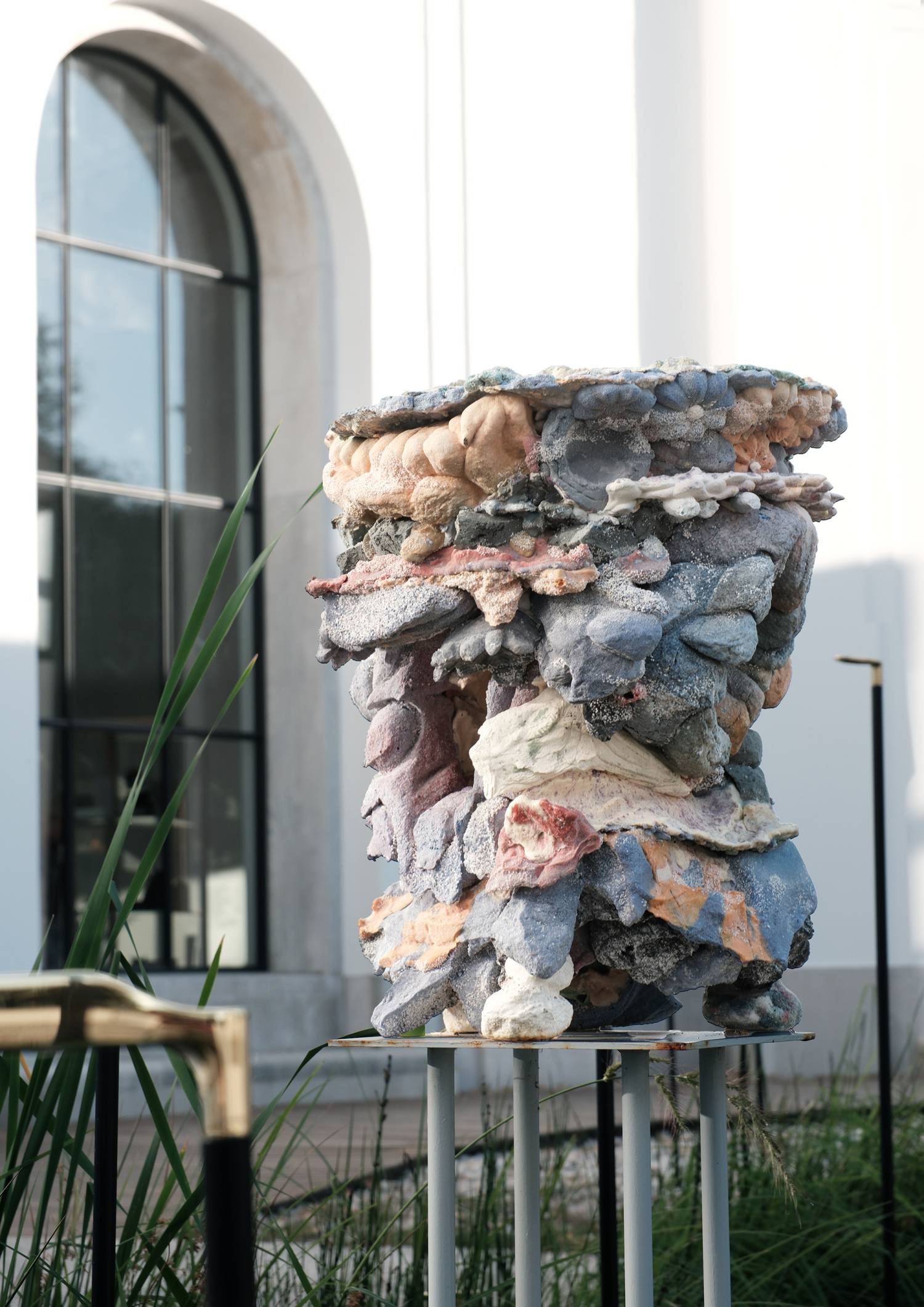
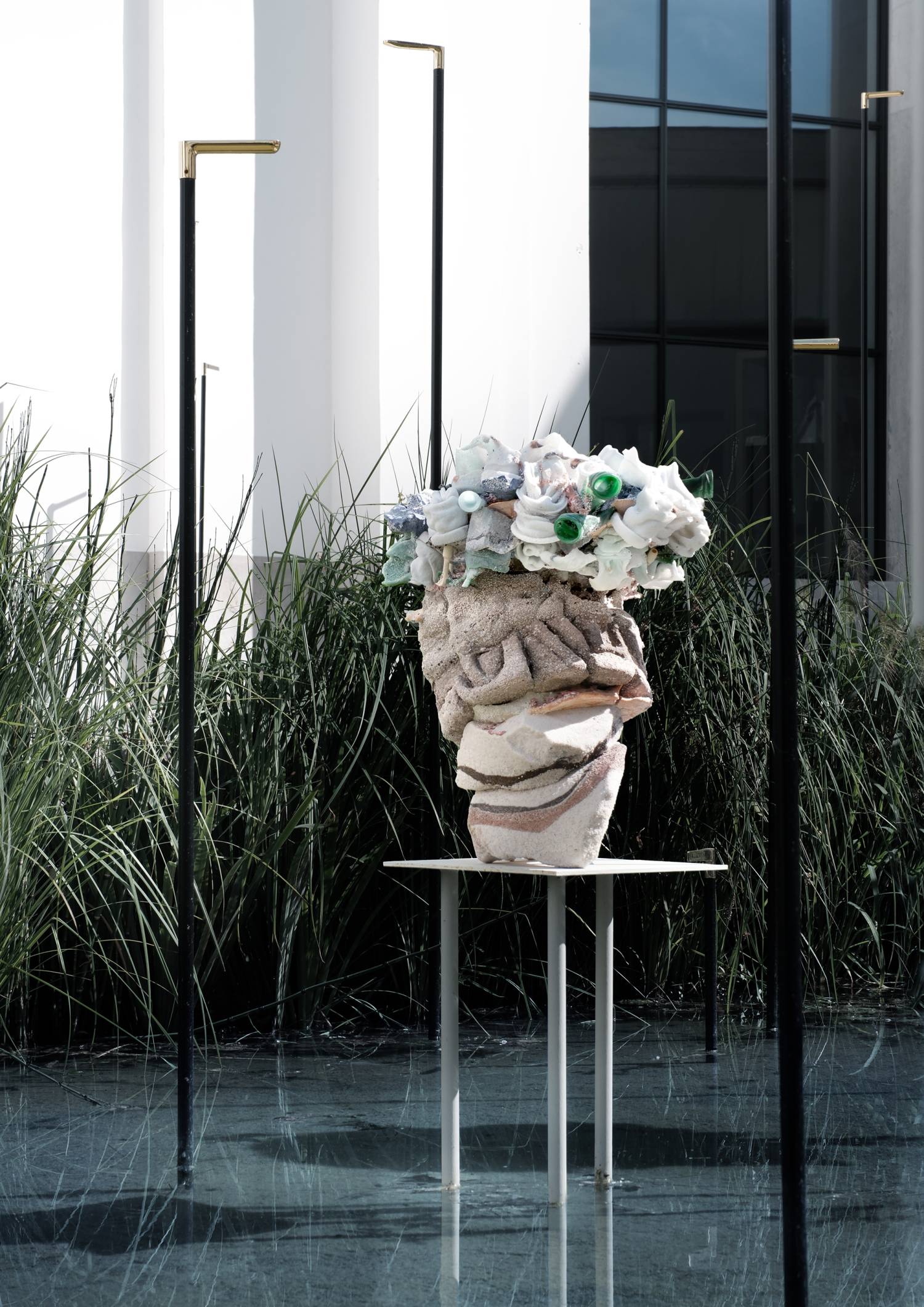
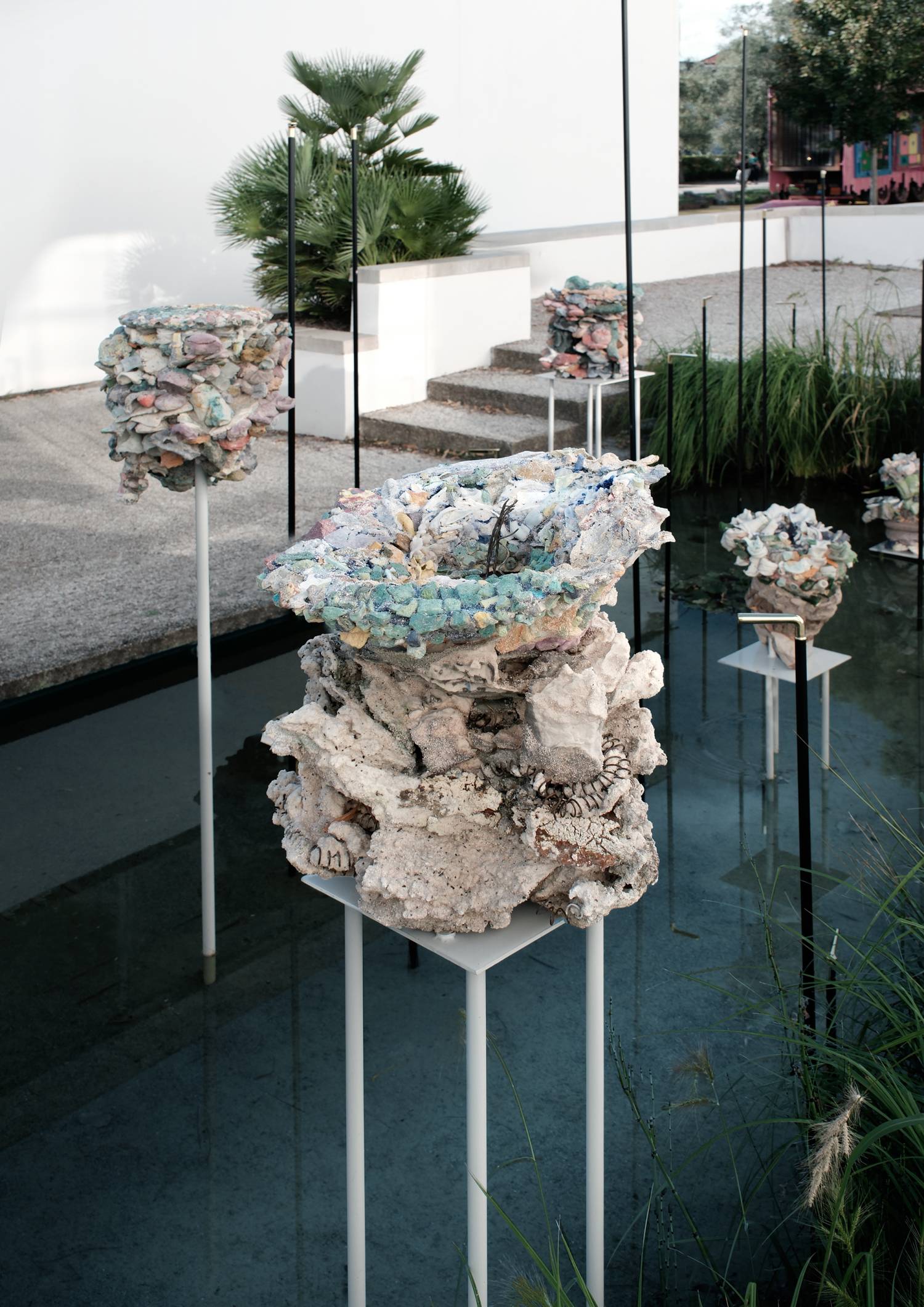
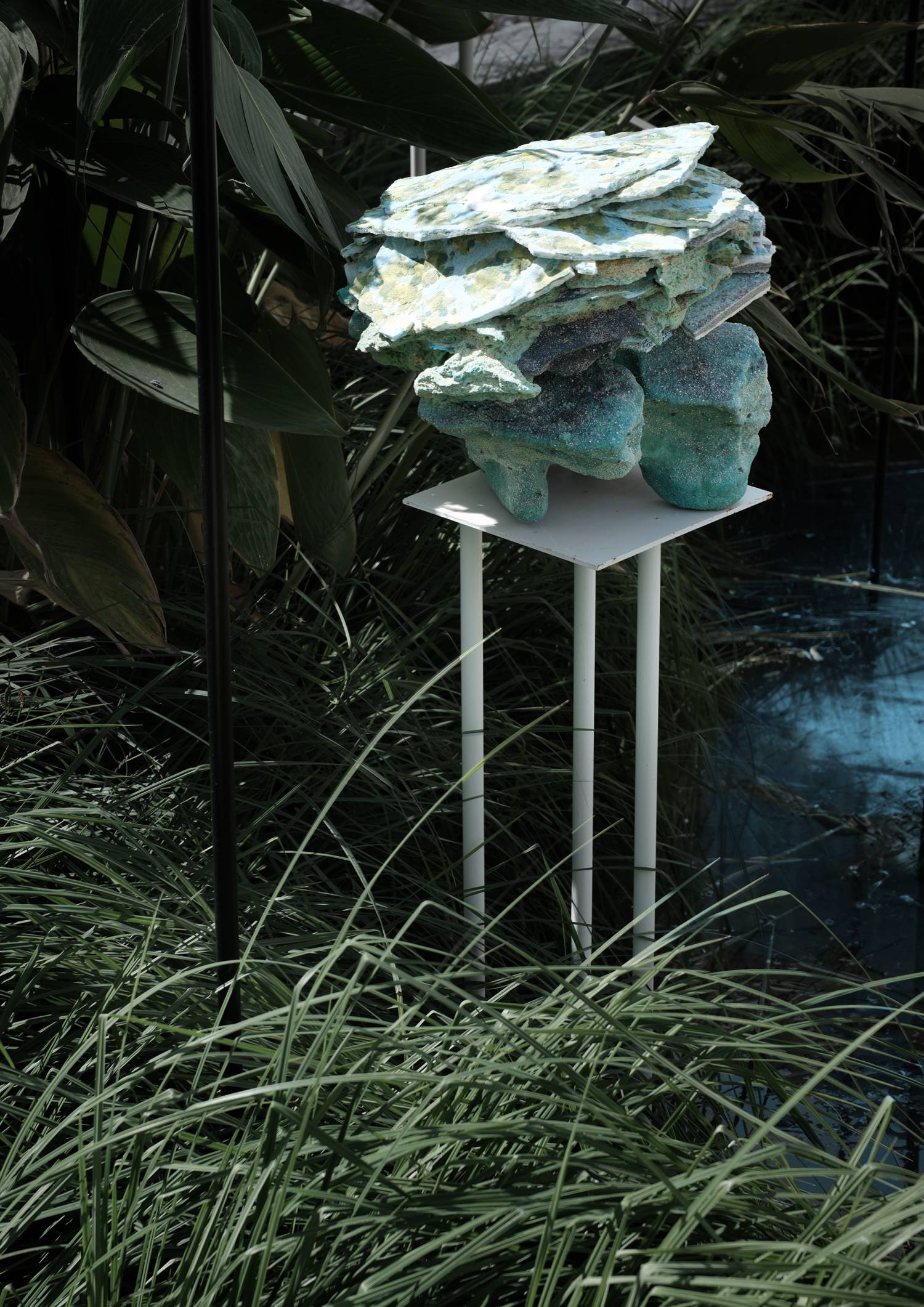
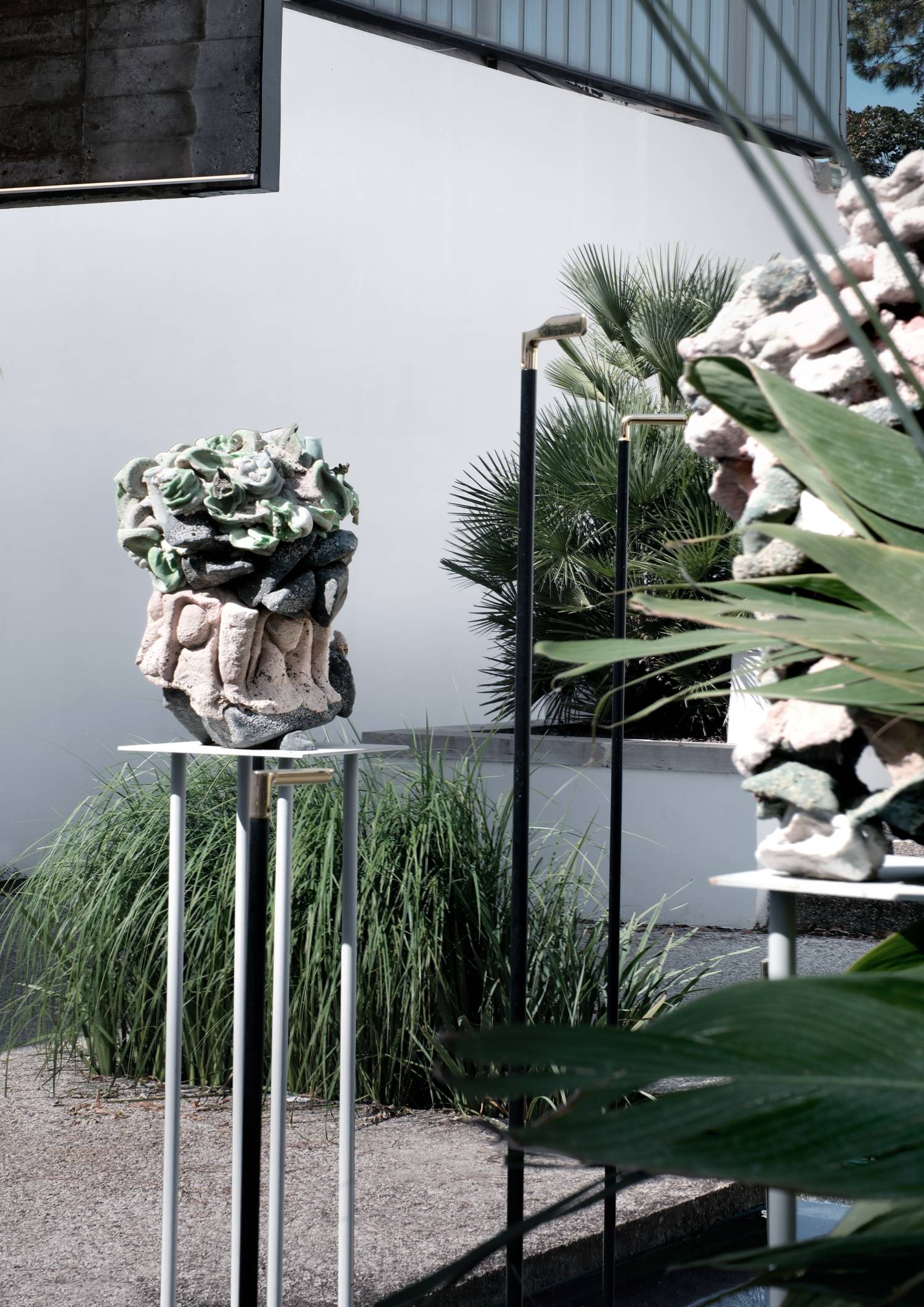
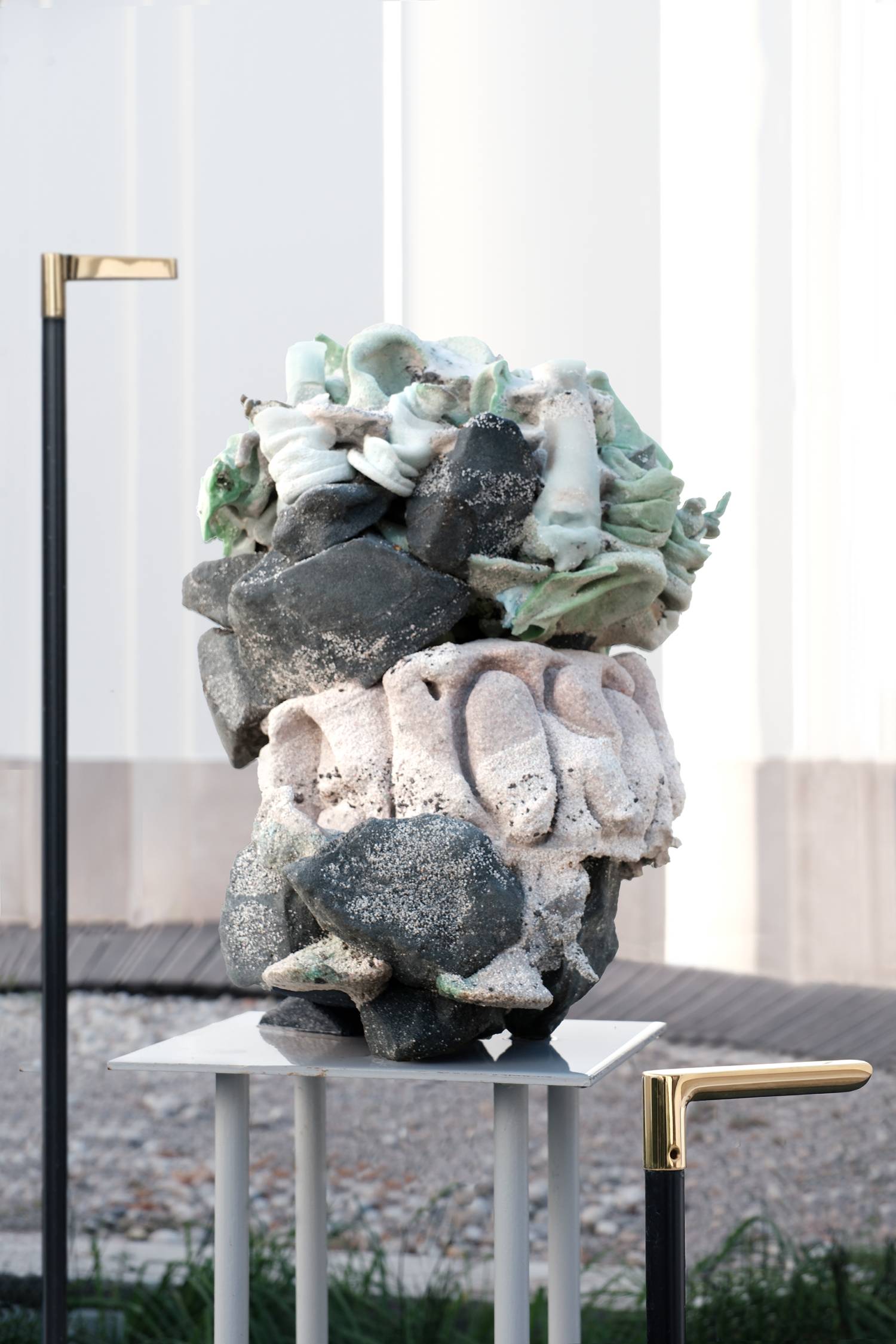
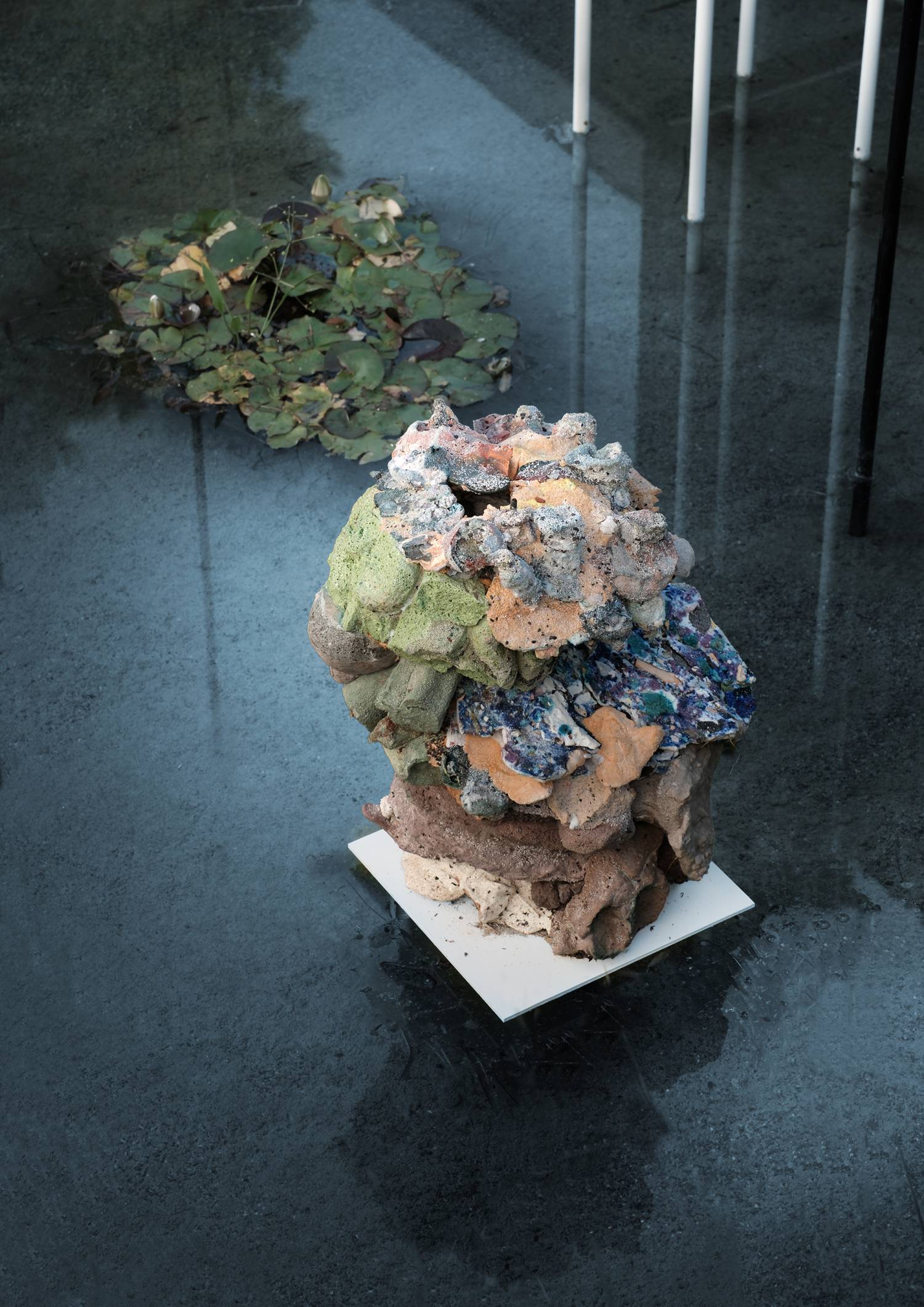
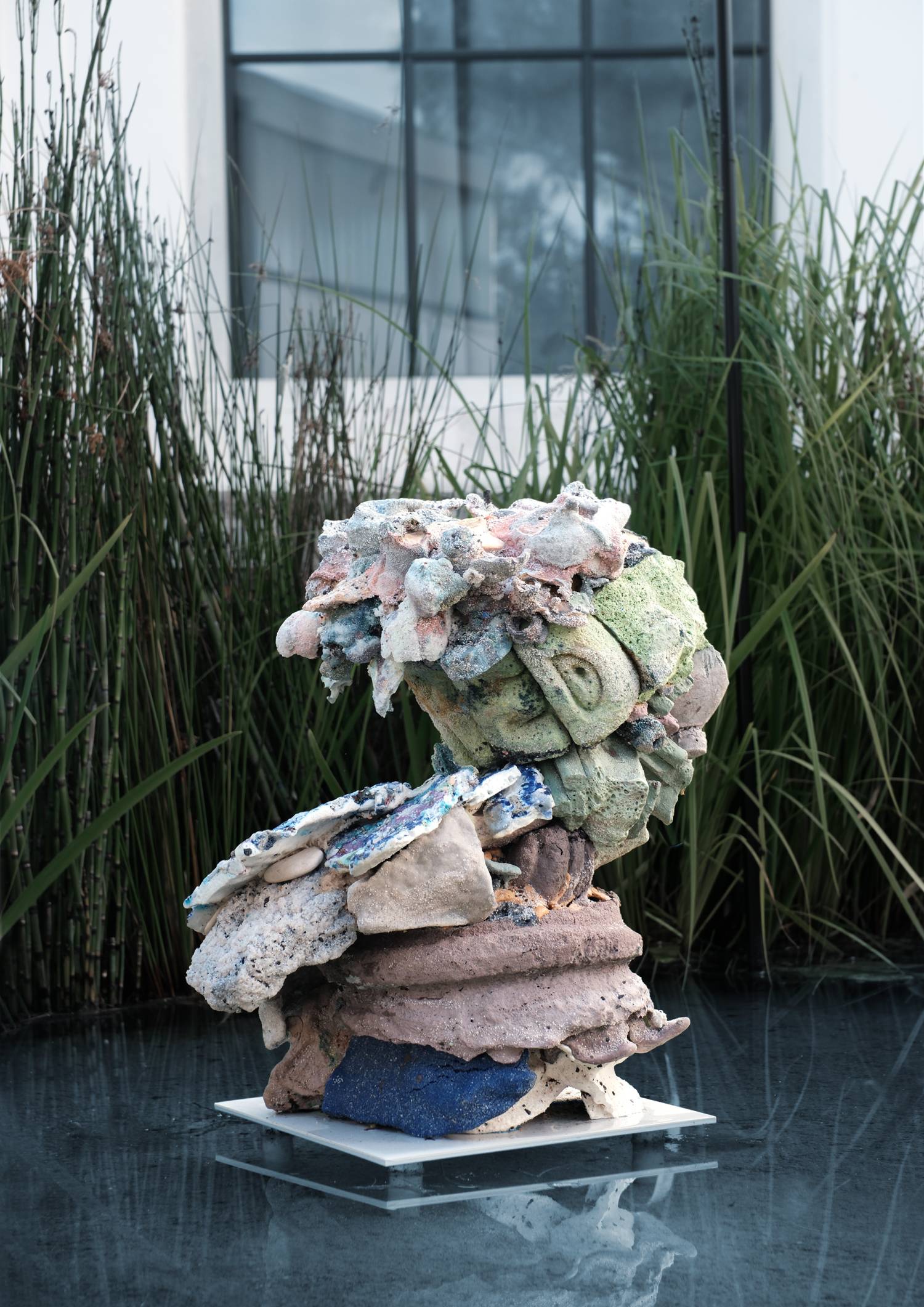
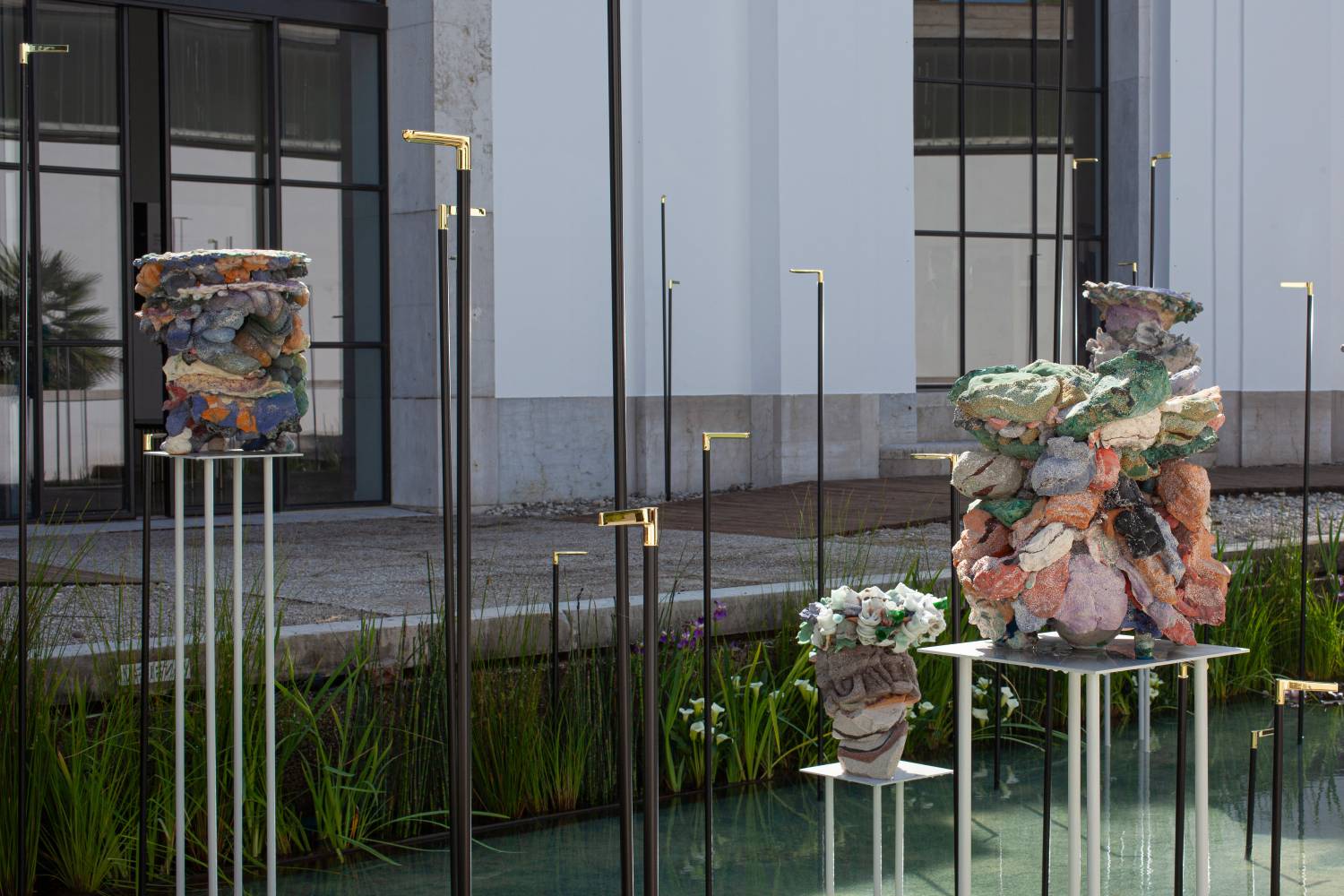
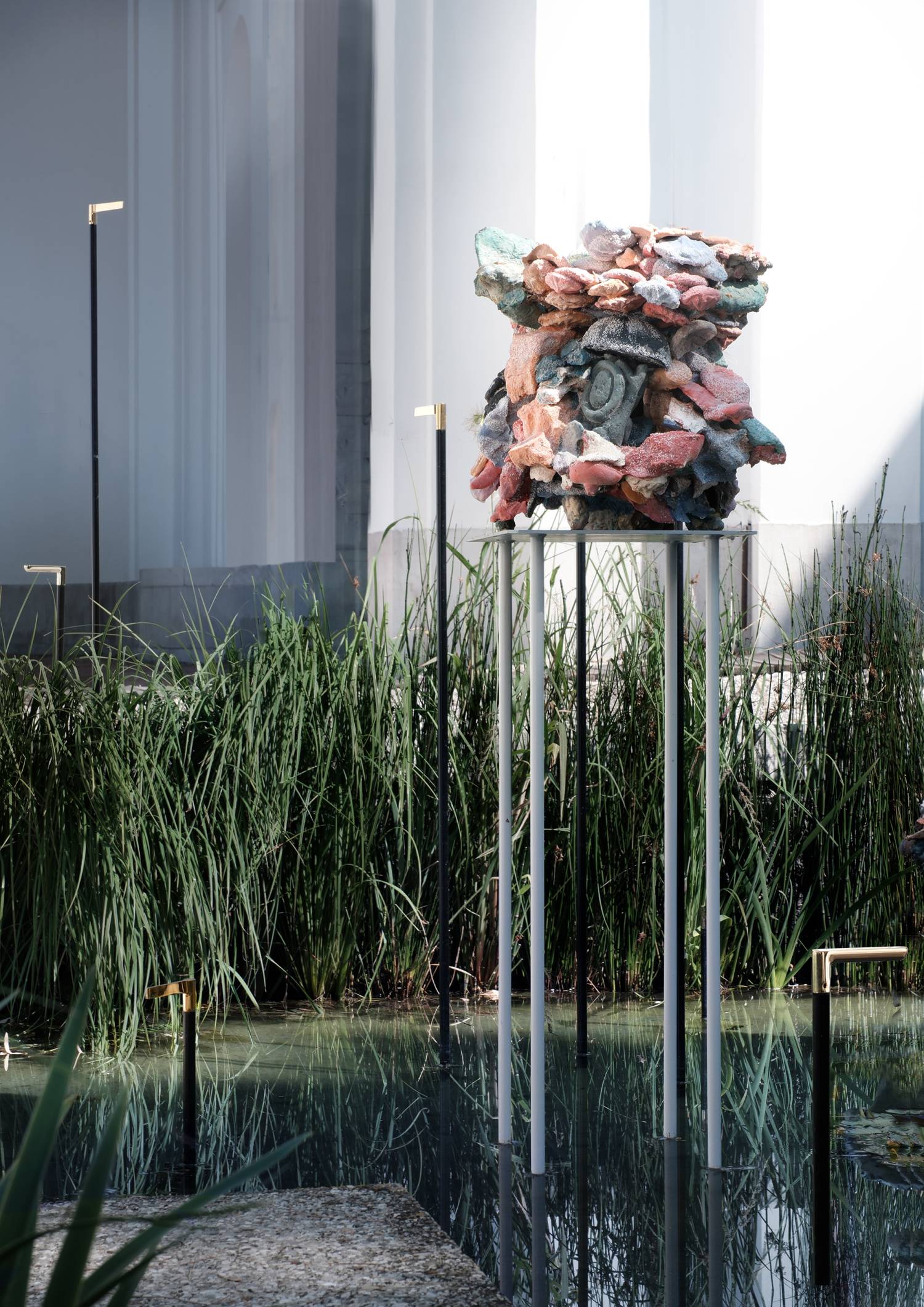
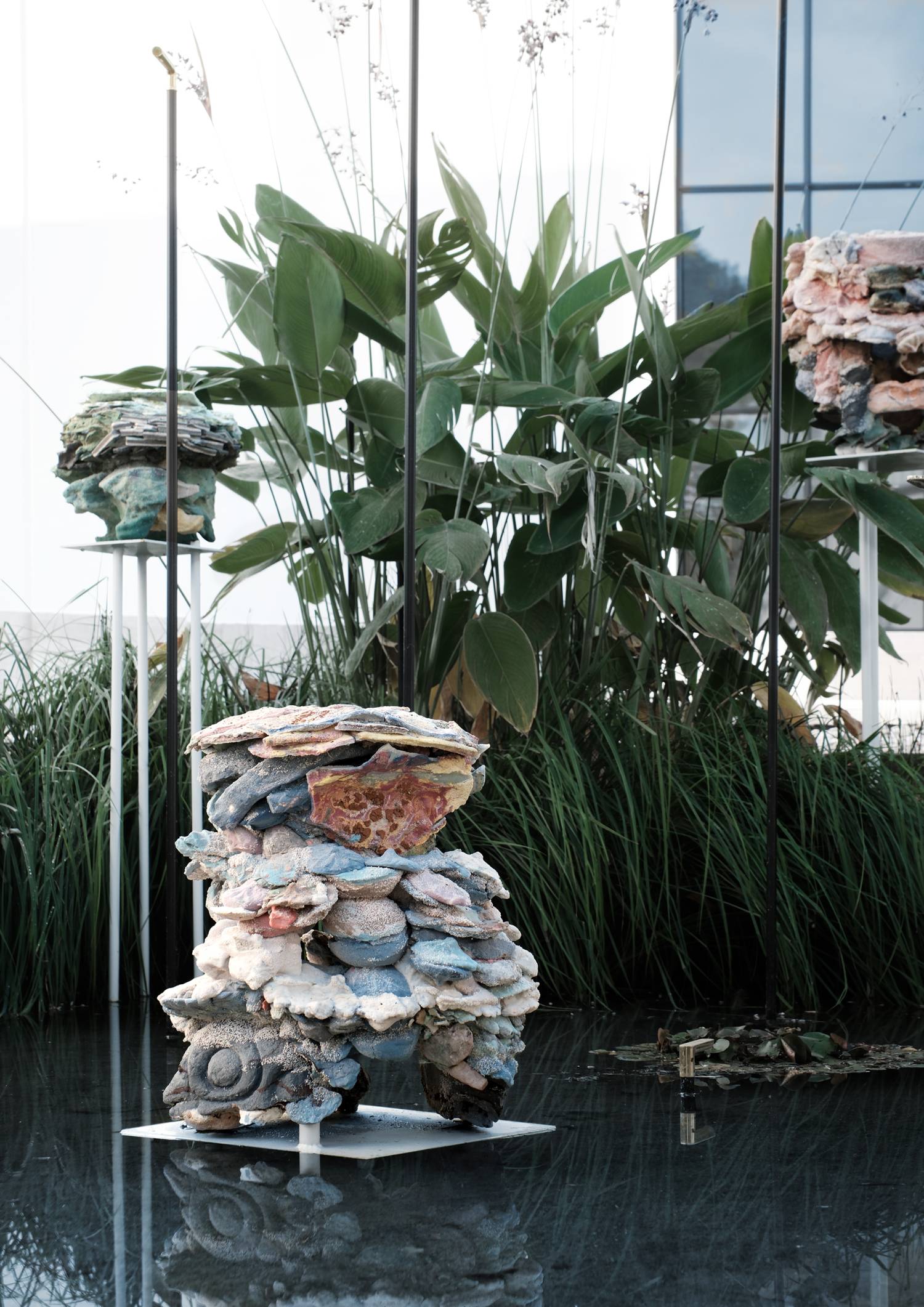
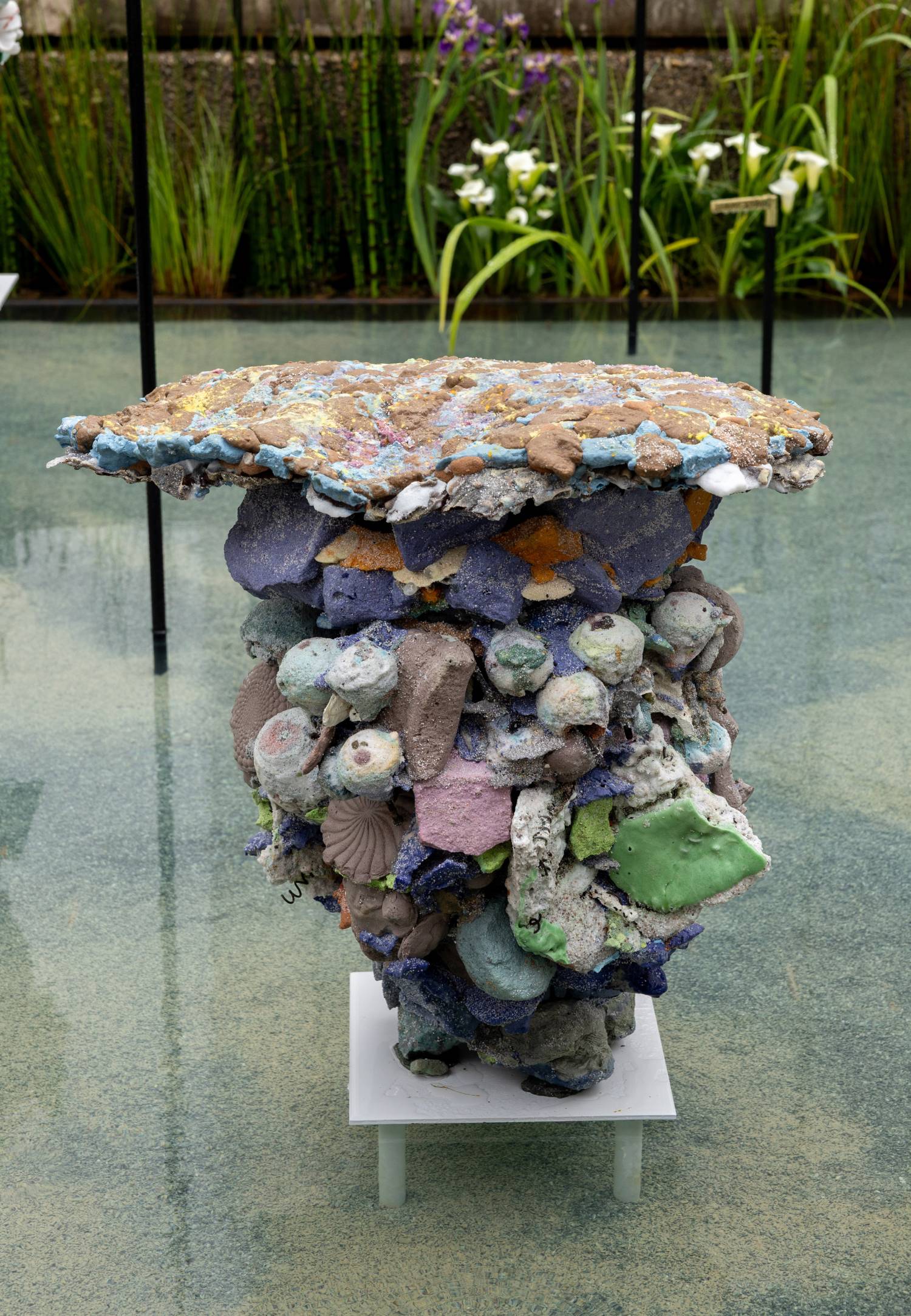
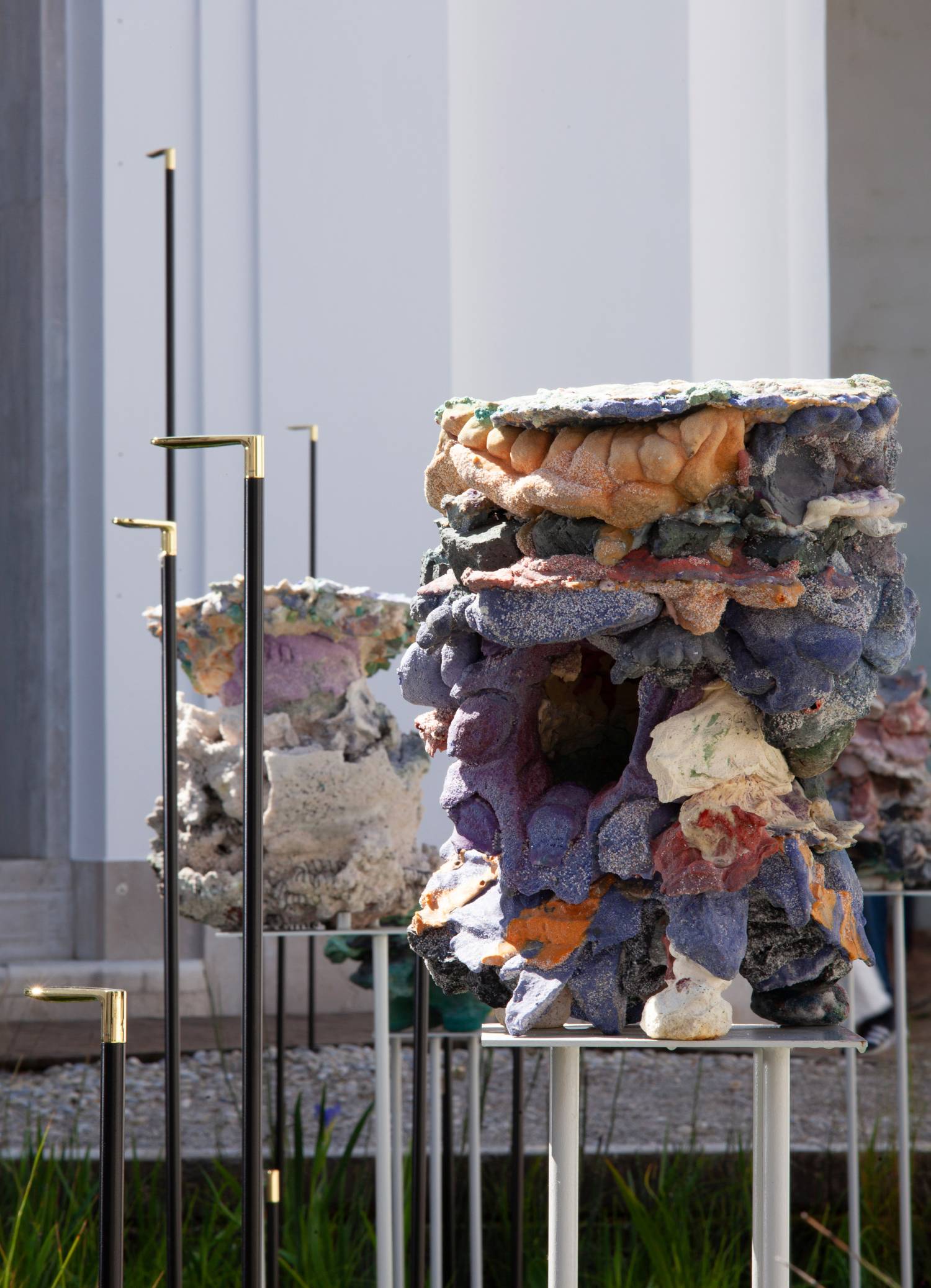
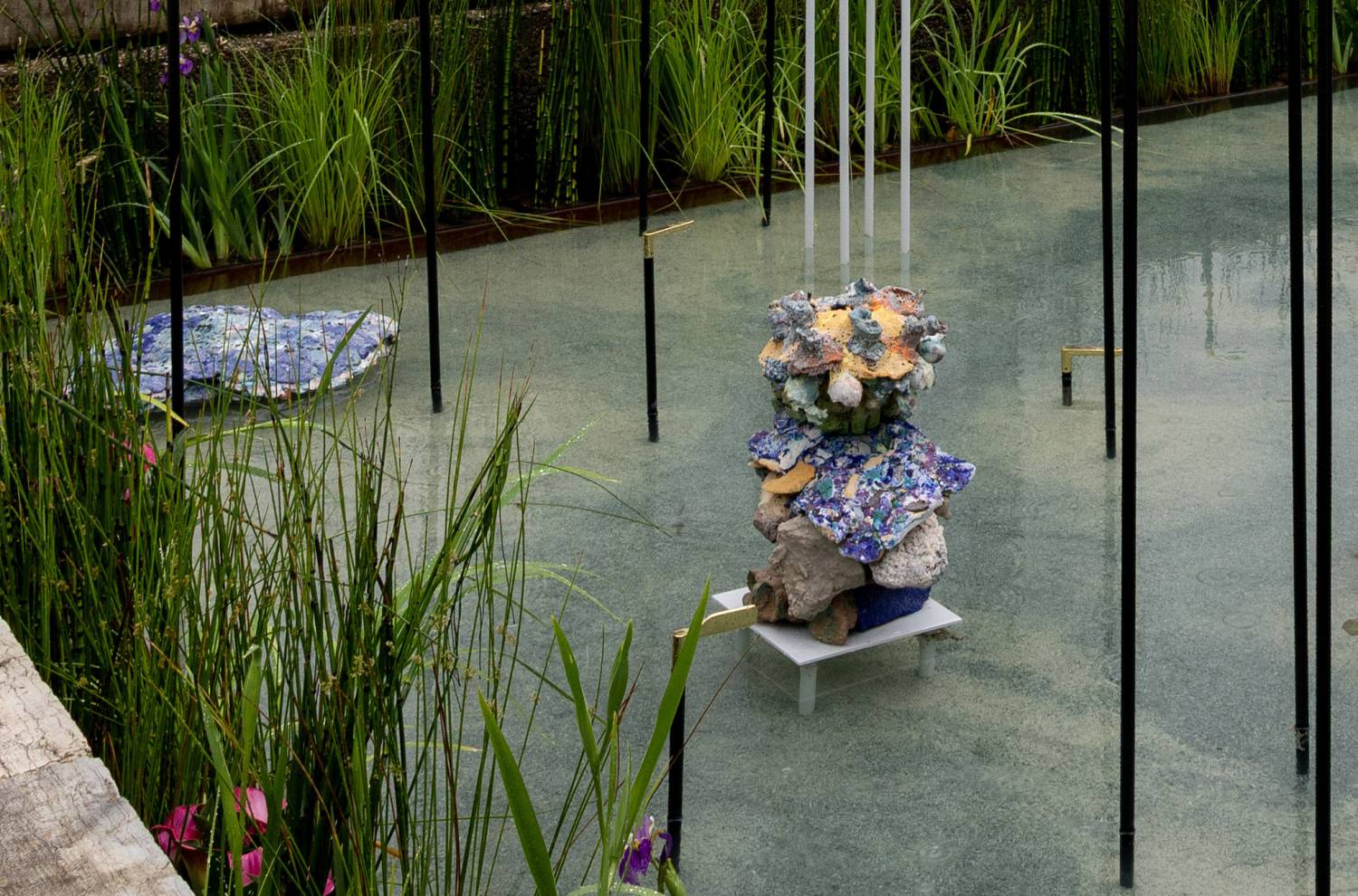
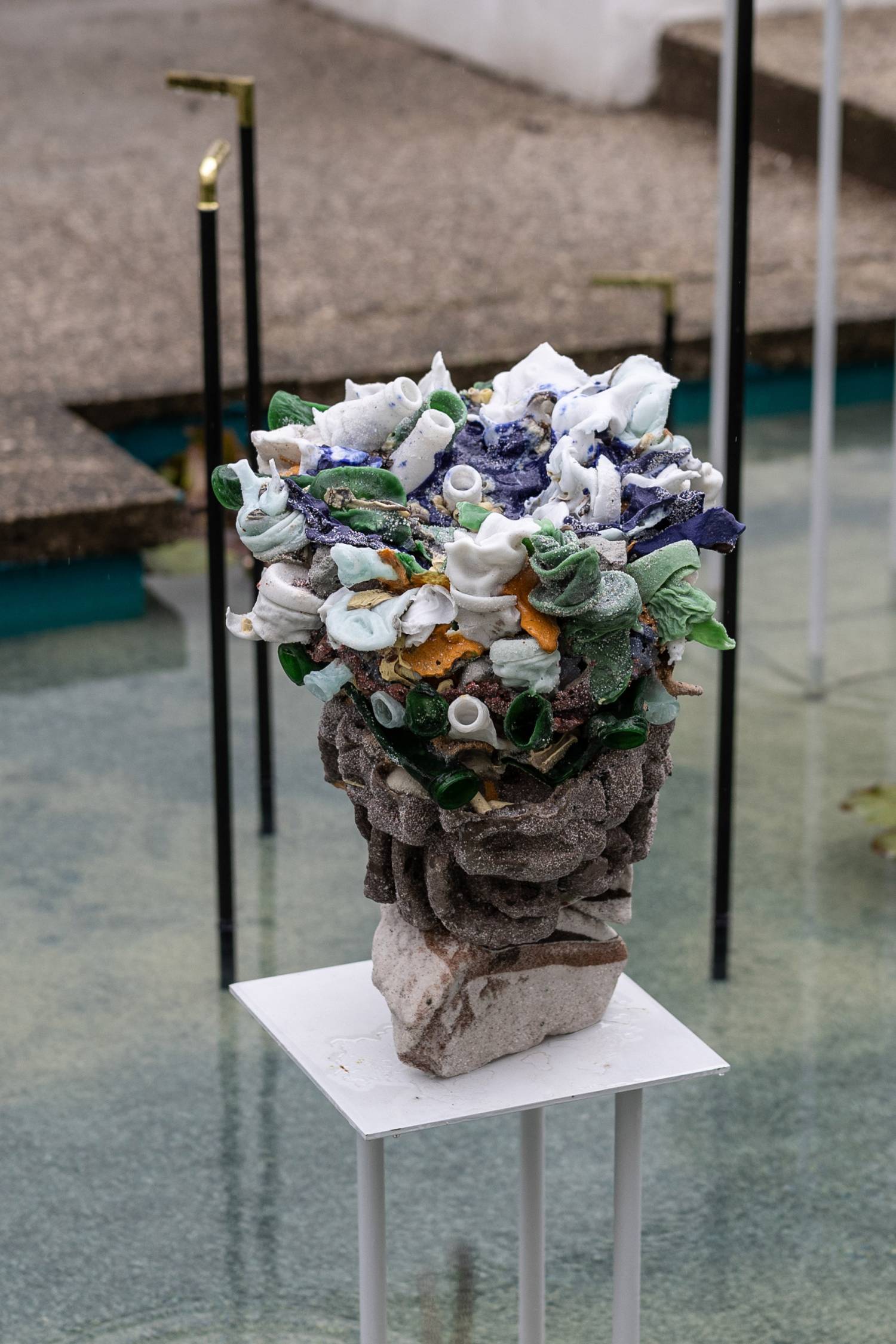
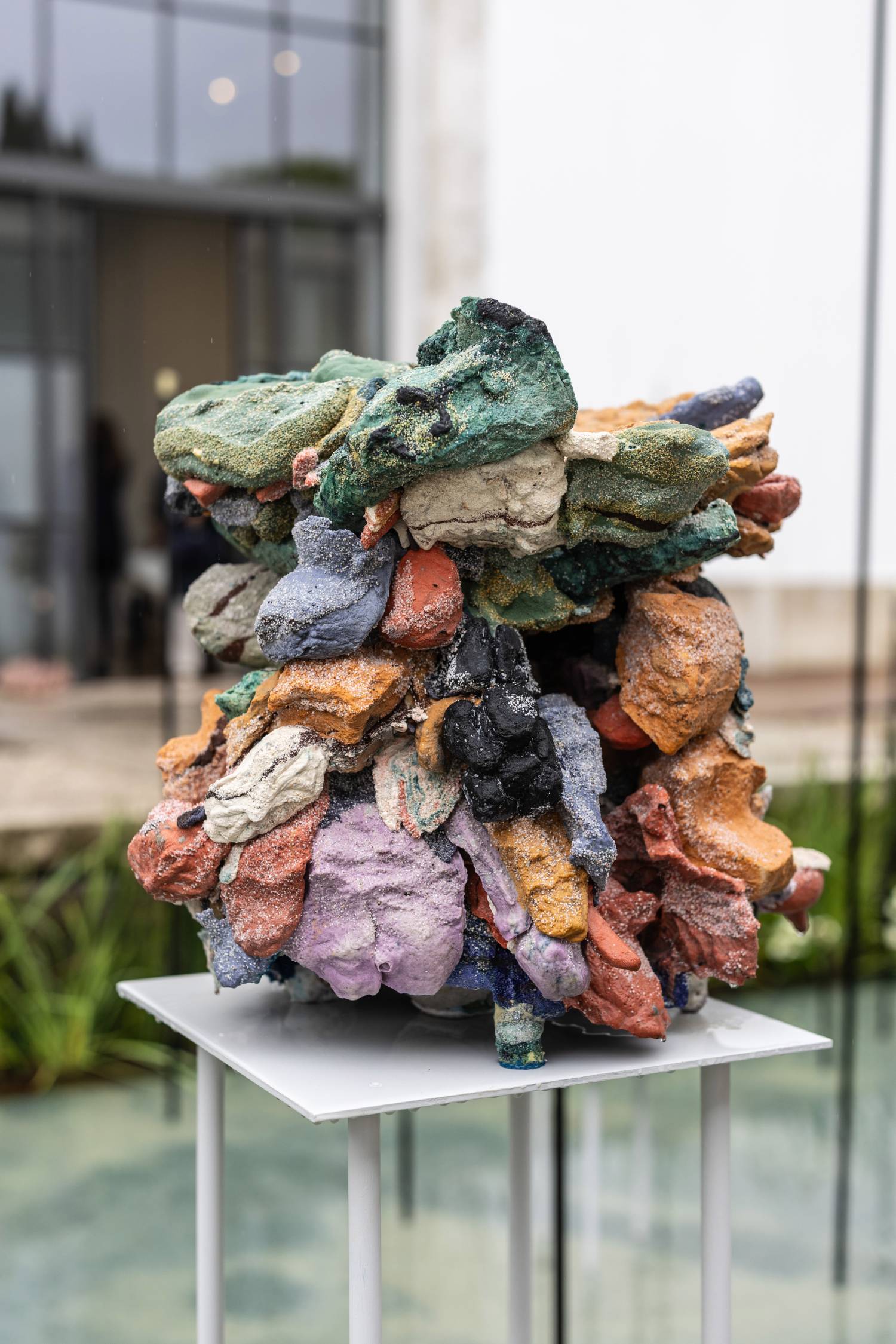
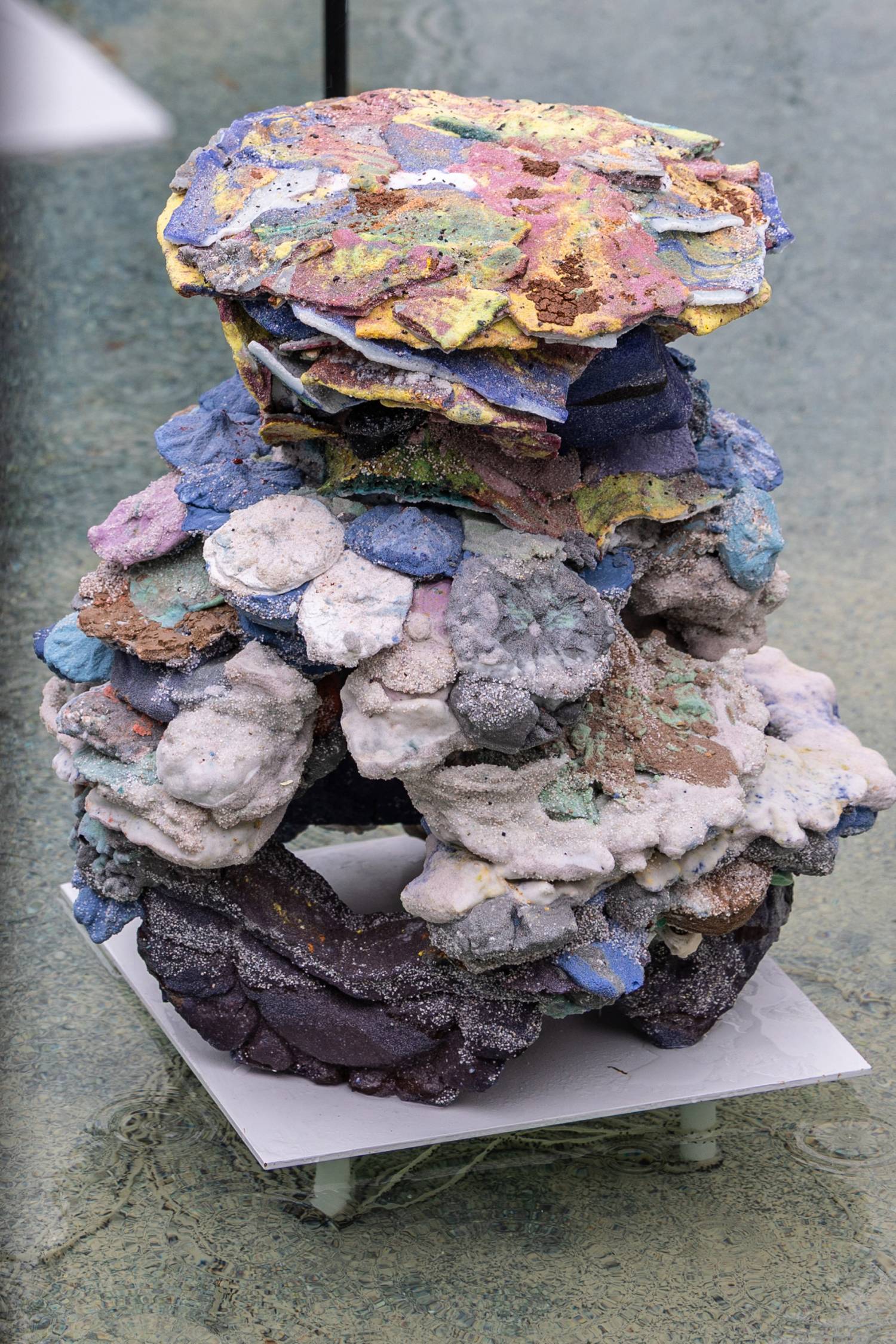
Alberto Scodro comes from Nove, the town of ceramics, where almost everything comes at a good price. Alberto trained as an artist, but by vocation he is a gymnast and a physicist. His curiosity about energy led him to poke his nose into processes of transformation. In Brussels, he transformed the heating system of a building into a giant coffee maker. At the heart of this tightropewalking operation lie two things we know very well: thermodynamic exchange and the magical constriction that allows boiling water to wind its way through the grains of precious powder, transforming thermal energy into caffeine. In Scodro’s mind, scaling up a coffee pot to the size of a building is just as reasonable as the amount of energy used every day around the world to grant millions of people their little shots of caffeine. At the center of the work lies the spark—the desire for that flash that pushes the brain to do a few extra somersaults. In the case of the coffee-maker-building, the entire network of pipes participates in the epiphany of coffee. In everyday life, it is society as a whole that works for the coveted cup: un café, s’il vous plaît. Serré. Like scientists, Alberto Scodro always tells the truth: we work for the G-spot of constriction, and to begin again. Now that we have acquired a taste for it, let us pick up the thread again from the Persistent Notes of Venice. Scodro presents a group of sculptures from the series UG (Untitled Glass-Sand). These are twelve works installed in the pool in front of the City Pavilion. Although they look like efflorescences dredged up from the seabed, they are produced in his kilns in Nove by fusing glass, sand, scraps, and other manufactured objects at one thousand degrees. As we linger with our gaze, we recognize fragments of bottles, taps, decorations, flowers, and lettering. Perhaps there is even a coffee pot inside: all human things that must be scrubbed with Vim if one does not want them to become rusty crusts or scrap for burners. And yet, despite all this triviality, their kinship with some of nature’s marvels—mushrooms, mosses, corals, minerals—makes them astonishing. They taste of nature, whim, submersion, and time. The Scodro doctrine: matter, energy, time. Looking at the UG works is like taking an accelerated course in the four things modernity has taught us: no more purity, no more origin, no more permanence—only transformation under the aegis of the only triad we can be certain of: matter, energy, time. Scodro says that if you cut the UG works in two or three pieces, the only thing that changes is the form; the stratification of materials remains the same. One believes him, and perhaps should take something from it. In his works there is no bodywork, and even the making is pushed toward the minimum pulse. The artist puts his hands into it, he more or less knows what might emerge, but the giant’s share is done by the reaction during firing. It is heat that accelerates the collapse toward which materials, abandoned to their destiny of compression, are already headed. What we see is what will happen. The good news is that it is unprecedented—and beautiful. While thinking about the project, we often spoke of the “conceptual” similarities between Scodro’s works and Venice. We tried to clarify some of these questions in a text that helped us move with clearer intentions. The pivot of that writing is the city’s mythical substance: “Seen from our proximity, it would seem that from its very origins Venice disavowed its own geographical boundaries. It is likely that someone—more than one person—at some point sensed the possibility of establishing themselves in the most fertile territories of myth. To do so, they took advantage of the sea and of the dreamlike voice of their city, whose singularity, it is worth remembering, rests on the skeleton that supports it: a remote oak forest of piles connecting it to the very foundations of life. From the perspective of those who live there, Venice is a shipwrecked space: the organic, everyday, and even slightly impertinent expression of fragility. The city’s happy instability is entirely contained in the connection between water and land, two little things that belong to the elementary chemistry of life—including poetic and philosophical life—and that direct our will in the sum of matter and imagination.” Venice is like that. When you arrive in the city, if you are not Venetian and the day happens to be one of the wrong ones, you pay: 5 or 10 euros (the difference depends on your promptness) to walk on water. Like Jesus—or Riccardo Selvatico. It was the latter, the lesser known of the two, who at the end of the nineteenth century decided that Venice had the right tide to gather the mirages of the whole world into one garden. With these thoughts in mind, we believed Alberto Scodro’s conceptual somersaults could tune us to the minds of the great founders. In the pool, the twelve sculptures are accompanied by a reed bed of elongated handles mounted on extensions of varying lengths, from thirty centimeters to three meters. The long tubes allow access to underwater doors traced in the water by bubbles. I think it is our world, but seen as if from below: handle X opens the gate of Doge’s Palace, handle Y the door of Fondaco dei Turchi; then Palazzo Fortuny, Molino Stucky, Ca’ Rezzonico, or Palazzo Mocenigo. All places where wonder has overcome integrity: stuccoes have followed the inclinations of collapsing foundations; to avoid slipping, one wall has hung itself onto another; and gold, in order to endure, has even climbed onto mirrors. It is clear that here things are no longer separate: the whole and the broken, resistance and fragility, above and below, nature and culture, form and word, matter and imagination. No. Everything exists together in an improper continuity. Emergedsubmerged— this is the title of Scodro’s note for the Venice Pavilion. It could just as well have been timespace, organicinorganic, wreckjewel, natureculture. Scodro’s proof lies in suggesting somersaults. Within the parenthesis of the world that is the Biennale, the pool stands still and everything else spins. It looks like the Tagadà ride they install in the Giardini at Christmas. You can see it turning all the way from Giudecca. If Scodro did not invent it, he could have. For now, along the edges of the Pavilion’s pool, the imaginative device highlights how in Venice greatness belongs neither to earth nor sky, but to water. A row of bricole holds up the city and gives it its sense of illusion. All of us, walking across it with a certain distracted trust, ask ourselves: how can Venice remain where it is? Why has the wind not carried it away like a raft? Why do we still see the whole city and not only the bell tower of St. Mark’s Campanile rising from the water like in Lake Resia? Engineering explanations reassure our steps without darkening the myth. Venice remains the only Atlantis we can experience alive. It is the metaphysics of water: standing upon it means asking ourselves how we might overcome our own condition. Turning a corner in a calle, for example, we might meet Poseidon, Gadiro, or Mestore. Perhaps not exactly them, but someone we imagine to be a distant relative, yes. Their name will be Mark, Anton, or Felicia; they will speak English and be an artist, an architect, or a poet. But what difference does it make? Whoever arrives here becomes the protagonist of a rebirth. At home they feel miserable. In Venice, while riding the vaporetto, they become a being with wings instead of hair, or a merman ready for travel, poetry, and feeling. Thinking around these ideas, while driving his van back toward Nove, Alberto Scodro chose not to dwell on the risk Venice runs of being irreversibly punished by the wrath of God for an excess of greed. It is a subject that would require three terribly boring Biennales in a row, the way one punishes children when one is truly serious. Instead, no: Scodro too tuned himself to the songs of the lagoon, dedicating his work to fantastic transformations, masterfully cultivated by the city that every day makes love with water and with reality. Scodro knows this—but even if he did not, he would not care. He would keep doing somersaults: physicists, artists, and gymnasts are like that.
Denis Isaia
Photos by Osvaldo Di Pierantonio, Marco Strina and Alberto Parise.
Curated By Giovanna Zabotti e Denis Isaia
In collaboration with Olivari spa
Alberto Scodro comes from Nove, the town of ceramics, where almost everything comes at a good price. Alberto trained as an artist, but by vocation he is a gymnast and a physicist. His curiosity about energy led him to poke his nose into processes of transformation. In Brussels, he transformed the heating system of a building into a giant coffee maker. At the heart of this tightropewalking operation lie two things we know very well: thermodynamic exchange and the magical constriction that allows boiling water to wind its way through the grains of precious powder, transforming thermal energy into caffeine. In Scodro’s mind, scaling up a coffee pot to the size of a building is just as reasonable as the amount of energy used every day around the world to grant millions of people their little shots of caffeine. At the center of the work lies the spark—the desire for that flash that pushes the brain to do a few extra somersaults. In the case of the coffee-maker-building, the entire network of pipes participates in the epiphany of coffee. In everyday life, it is society as a whole that works for the coveted cup: un café, s’il vous plaît. Serré. Like scientists, Alberto Scodro always tells the truth: we work for the G-spot of constriction, and to begin again. Now that we have acquired a taste for it, let us pick up the thread again from the Persistent Notes of Venice. Scodro presents a group of sculptures from the series UG (Untitled Glass-Sand). These are twelve works installed in the pool in front of the City Pavilion. Although they look like efflorescences dredged up from the seabed, they are produced in his kilns in Nove by fusing glass, sand, scraps, and other manufactured objects at one thousand degrees. As we linger with our gaze, we recognize fragments of bottles, taps, decorations, flowers, and lettering. Perhaps there is even a coffee pot inside: all human things that must be scrubbed with Vim if one does not want them to become rusty crusts or scrap for burners. And yet, despite all this triviality, their kinship with some of nature’s marvels—mushrooms, mosses, corals, minerals—makes them astonishing. They taste of nature, whim, submersion, and time. The Scodro doctrine: matter, energy, time. Looking at the UG works is like taking an accelerated course in the four things modernity has taught us: no more purity, no more origin, no more permanence—only transformation under the aegis of the only triad we can be certain of: matter, energy, time. Scodro says that if you cut the UG works in two or three pieces, the only thing that changes is the form; the stratification of materials remains the same. One believes him, and perhaps should take something from it. In his works there is no bodywork, and even the making is pushed toward the minimum pulse. The artist puts his hands into it, he more or less knows what might emerge, but the giant’s share is done by the reaction during firing. It is heat that accelerates the collapse toward which materials, abandoned to their destiny of compression, are already headed. What we see is what will happen. The good news is that it is unprecedented—and beautiful. While thinking about the project, we often spoke of the “conceptual” similarities between Scodro’s works and Venice. We tried to clarify some of these questions in a text that helped us move with clearer intentions. The pivot of that writing is the city’s mythical substance: “Seen from our proximity, it would seem that from its very origins Venice disavowed its own geographical boundaries. It is likely that someone—more than one person—at some point sensed the possibility of establishing themselves in the most fertile territories of myth. To do so, they took advantage of the sea and of the dreamlike voice of their city, whose singularity, it is worth remembering, rests on the skeleton that supports it: a remote oak forest of piles connecting it to the very foundations of life. From the perspective of those who live there, Venice is a shipwrecked space: the organic, everyday, and even slightly impertinent expression of fragility. The city’s happy instability is entirely contained in the connection between water and land, two little things that belong to the elementary chemistry of life—including poetic and philosophical life—and that direct our will in the sum of matter and imagination.” Venice is like that. When you arrive in the city, if you are not Venetian and the day happens to be one of the wrong ones, you pay: 5 or 10 euros (the difference depends on your promptness) to walk on water. Like Jesus—or Riccardo Selvatico. It was the latter, the lesser known of the two, who at the end of the nineteenth century decided that Venice had the right tide to gather the mirages of the whole world into one garden. With these thoughts in mind, we believed Alberto Scodro’s conceptual somersaults could tune us to the minds of the great founders. In the pool, the twelve sculptures are accompanied by a reed bed of elongated handles mounted on extensions of varying lengths, from thirty centimeters to three meters. The long tubes allow access to underwater doors traced in the water by bubbles. I think it is our world, but seen as if from below: handle X opens the gate of Doge’s Palace, handle Y the door of Fondaco dei Turchi; then Palazzo Fortuny, Molino Stucky, Ca’ Rezzonico, or Palazzo Mocenigo. All places where wonder has overcome integrity: stuccoes have followed the inclinations of collapsing foundations; to avoid slipping, one wall has hung itself onto another; and gold, in order to endure, has even climbed onto mirrors. It is clear that here things are no longer separate: the whole and the broken, resistance and fragility, above and below, nature and culture, form and word, matter and imagination. No. Everything exists together in an improper continuity. Emergedsubmerged— this is the title of Scodro’s note for the Venice Pavilion. It could just as well have been timespace, organicinorganic, wreckjewel, natureculture. Scodro’s proof lies in suggesting somersaults. Within the parenthesis of the world that is the Biennale, the pool stands still and everything else spins. It looks like the Tagadà ride they install in the Giardini at Christmas. You can see it turning all the way from Giudecca. If Scodro did not invent it, he could have. For now, along the edges of the Pavilion’s pool, the imaginative device highlights how in Venice greatness belongs neither to earth nor sky, but to water. A row of bricole holds up the city and gives it its sense of illusion. All of us, walking across it with a certain distracted trust, ask ourselves: how can Venice remain where it is? Why has the wind not carried it away like a raft? Why do we still see the whole city and not only the bell tower of St. Mark’s Campanile rising from the water like in Lake Resia? Engineering explanations reassure our steps without darkening the myth. Venice remains the only Atlantis we can experience alive. It is the metaphysics of water: standing upon it means asking ourselves how we might overcome our own condition. Turning a corner in a calle, for example, we might meet Poseidon, Gadiro, or Mestore. Perhaps not exactly them, but someone we imagine to be a distant relative, yes. Their name will be Mark, Anton, or Felicia; they will speak English and be an artist, an architect, or a poet. But what difference does it make? Whoever arrives here becomes the protagonist of a rebirth. At home they feel miserable. In Venice, while riding the vaporetto, they become a being with wings instead of hair, or a merman ready for travel, poetry, and feeling. Thinking around these ideas, while driving his van back toward Nove, Alberto Scodro chose not to dwell on the risk Venice runs of being irreversibly punished by the wrath of God for an excess of greed. It is a subject that would require three terribly boring Biennales in a row, the way one punishes children when one is truly serious. Instead, no: Scodro too tuned himself to the songs of the lagoon, dedicating his work to fantastic transformations, masterfully cultivated by the city that every day makes love with water and with reality. Scodro knows this—but even if he did not, he would not care. He would keep doing somersaults: physicists, artists, and gymnasts are like that.
Denis Isaia
Photos by Osvaldo Di Pierantonio, Marco Strina and Alberto Parise.